Why is Chauffeur Service Expensive in New York City?
The high cost of chauffeur service in NYC reflects luxury transportation standards, skilled chauffeurs, fuel prices, tolls, maintenance, and city regulations. Clients pay for convenience, punctuality, privacy, and a premium travel experience throughout New York City.

Why is Chauffeur Service Expensive in New York City?
Chauffeur services in New York City are expensive due to luxury vehicles, professional drivers, traffic delays, parking fees, insurance costs, and high operating expenses. Premium comfort, reliability, and personalized service also contribute to higher pricing across NYC transportation services.

New York City stands in a category of its own when it comes to the cost of doing business. From sky-high real estate to labyrinthine regulatory requirements, every industry operating in the five boroughs faces elevated overhead that ultimately passes through to consumers. Professional chauffeur services are no exception. When clients call to ask why a chauffeured sedan from JFK Airport to Midtown Manhattan costs significantly more than an app-based rideshare, the answer spans vehicle quality, driver professionalism, insurance depth, regulatory compliance, and the sheer operational complexity of serving one of the world's busiest cities.
This guide pulls back the curtain on every cost layer in the NYC chauffeur industry. Whether you are a corporate travel manager evaluating vendors, a couple planning wedding transportation, or an individual weighing comfort against cost, understanding these dynamics will help you make confident, informed decisions. We have compiled real cost figures, regulatory benchmarks, fleet comparisons, pricing tables, and actionable tips so nothing is left vague.
What It Really Costs to Operate a Professional Chauffeur Car in NYC?
Before diving into each factor individually, the table below provides a high-level summary of the primary cost categories affecting the annual operating expense of a single professional vehicle in New York City. Every line item below is a real, recurring expense that a licensed, insured, TLC-compliant chauffeur service must absorb before a single client ever steps into the vehicle.
|
Cost Category |
Estimated Annual Impact per Vehicle |
|
Commercial Insurance (TLC-mandated) |
$8,000 – $15,000 |
|
TLC Licensing & Renewal Fees |
$1,500 – $3,000 |
|
Professional Driver Salary + Benefits |
$50,000 – $90,000 |
|
Vehicle Purchase / Lease Payment |
$12,000 – $60,000 |
|
Fuel (NYC Premium Rates) |
$8,000 – $20,000 |
|
Maintenance, Detailing & Repairs |
$5,000 – $15,000 |
|
Garage / Parking Storage (NYC) |
$10,000 – $60,000 |
|
Toll Expenses (Bridges, Tunnels, MTA) |
$3,000 – $8,000 |
|
Technology, Dispatch & Software |
$2,000 – $5,000 |
|
Administrative & Support Staff |
$6,000 – $12,000 |
Industry Note: These figures represent per-vehicle costs. A mid-size chauffeur fleet of 15 vehicles can carry $1.2M – $2.8M in annual operating expenses before factoring in any corporate overhead. These costs are not optional — they are the baseline for legal, safe, and professional operation in NYC.
NYC Operating Costs vs. National Averages
Many clients compare NYC chauffeur rates to limousine prices they have seen in other cities and assume local providers are overcharging. The truth is that the New York City market carries fundamentally different cost burdens that have no parallel in most American markets. The table below compares key cost categories between NYC-based operators and national averages to illustrate the gap clearly.
|
Expense Item |
NYC Average |
National Average |
|
Liability Insurance (per vehicle/yr) |
$12,500 |
$5,200 |
|
Fuel Cost per Gallon (regular) |
$4.20 – $4.80 |
$3.40 – $3.80 |
|
Commercial Garage Parking (monthly) |
$600 – $2,000 |
$150 – $400 |
|
Licensed Mechanic Labor (per hour) |
$180 – $250 |
$90 – $130 |
|
Driver Average Annual Wage |
$55,000 – $75,000 |
$35,000 – $50,000 |
|
Business Licensing & Fees (annual) |
$4,000 – $8,000 |
$500 – $2,000 |
|
Commercial Real Estate (per sq ft/yr) |
$80 – $200 |
$15 – $40 |
The numbers above reveal that NYC operators routinely pay 2–4 times more for identical services and commodities compared to national baselines. Insurance alone runs nearly 140% above the national average. When you factor in every elevated cost category simultaneously, the resulting service rates are not a reflection of profiteering — they are a mathematical reality.
Insight: The Midtown Manhattan congestion surcharge introduced under New York's MTA Congestion Pricing program adds tolls for vehicle entry below 60th Street. For chauffeur services completing multiple Manhattan trips daily, this adds thousands in annual pass-through costs per vehicle.
TLC Licensing, Compliance, and Regulatory Costs
The New York City Taxi and Limousine Commission (TLC) is one of the most rigorous ground transportation regulatory bodies in the United States. It governs all for-hire vehicle operators in the five boroughs through approximately 2,000 pages of active rules covering vehicle specifications, driver conduct, fare disclosure, accessibility requirements, technology mandates, and operational standards. Compliance is non-negotiable — violations result in fines, license suspensions, and in serious cases, permanent revocation.
Every professional chauffeur company in New York City absorbs substantial annual costs simply to remain legally operational. The table below details the primary TLC requirements along with their associated financial impact.
|
TLC Requirement |
Details |
Approximate Cost |
|
For-Hire Vehicle (FHV) License |
Required for every commercial vehicle; must be renewed annually |
$550 – $750/yr per vehicle |
|
Driver TLC License |
24-hour pre-licensing course, background check, drug test, medical exam |
$500 – $900 per driver |
|
Vehicle Inspection (TLC Certified) |
Full mechanical, safety, and appearance inspection twice yearly |
$250 – $400 per inspection |
|
Commercial Auto Insurance |
Minimum $100K/$300K bodily injury, $200K property damage |
$8,000 – $15,000/yr |
|
Accessible Vehicle Compliance |
ADA-accessible vehicles required as % of fleet based on fleet size |
$5,000 – $20,000 per vehicle |
|
Electronic Trip Records |
All trips must be logged digitally via TLC-approved dispatch system |
$1,200 – $3,600/yr (software) |
|
Driver Background Screening |
FBI fingerprint check, 7-year driving record, criminal history review |
$150 – $300 per driver |
|
Vehicle Camera System |
Front-facing and interior cameras required on all TLC vehicles |
$800 – $2,000 per vehicle |
Beyond direct licensing fees, regulatory compliance demands dedicated administrative staff capable of managing inspection schedules, driver records, vehicle documentation, and TLC correspondence. For a fleet of 15 to 25 vehicles, this typically requires at least one full-time compliance administrator — an additional $45,000–$65,000 annual salary expense that clients rarely consider when comparing prices.
Pro Tip: Always verify that your chauffeur service is TLC-licensed before booking. You can confirm license status for both the vehicle and the driver at the NYC TLC public license search portal at nyc.gov/tlc. Unlicensed operators may offer lower rates but expose you to serious legal and safety risks.
Professional Driver Standards and Training Investments
The most visible difference between a professional chauffeur and an app-based driver is the level of training, vetting, and ongoing performance management behind the wheel. A chauffeur is not simply a driver who owns a nice car — they are a trained professional whose conduct, appearance, knowledge, and discretion directly represent the company. We invest heavily in this human capital because service quality is inseparable from driver quality.
The table below outlines the qualification requirements and associated costs that professional operators invest in every driver they bring on board.
|
Qualification |
Requirements |
Cost to Operator |
|
TLC For-Hire Driver License |
24-hr course, drug test, medical exam, FBI fingerprint, DMV record check |
$500 – $900 per driver |
|
Defensive Driving Certification |
NY State-approved 6-hour defensive driving course; renewal every 3 years |
$100 – $200 per renewal |
|
Commercial Driver's License (CDL) |
Required for charter buses (Class B or A); separate written and road tests |
$1,500 – $3,000 per driver |
|
Customer Service Training |
In-house training on etiquette, confidentiality, and passenger handling |
$500 – $1,500 per driver/yr |
|
Route Knowledge Assessment |
Knowledge test on NYC boroughs, airports, major venues, and tri-state highways |
Internal cost |
|
Annual Driver Background Refresh |
Yearly DMV record checks; disqualifying violations reviewed |
$150 – $300 per driver/yr |
|
First Aid / CPR Certification |
Red Cross or AHA certification; company-sponsored renewal every 2 years |
$80 – $150 per certification |
Consider that a fleet of 20 drivers requires upwards of $25,000–$45,000 in initial qualification and training costs before those drivers generate a single dollar of revenue. Annual refresher training, continuing education, and performance evaluations add another $10,000–$20,000 to the total. These are genuine, quantifiable investments in service quality that the cheapest transportation options cannot match.
What a Professional Chauffeur Delivers Beyond Driving?
- Punctuality Guarantee: Arrive 10–15 minutes early for every pickup, monitor real-time traffic continuously, and pre-plan alternate routes.
- Flight Tracking: For airport assignments, drivers monitor actual arrival gate data — not just scheduled arrival — ensuring presence even for flights delayed hours.
- Luggage Assistance: Physical assistance with bags at curb, terminal, and destination — a service app drivers rarely offer and cannot be held accountable for.
- Discretion and Confidentiality: Professional chauffeurs are trained not to discuss clients, routes, or destinations with third parties — a critical requirement for executive and celebrity clients.
- Vehicle Condition Responsibility: Chauffeurs perform pre-trip inspections, maintain interior cleanliness between runs, and report issues immediately to preserve client experience.
- Emergency Preparedness: CPR-certified drivers, knowledge of nearest hospitals, and composure under pressure provide genuine safety value for corporate and medical transport clients.
Our Full Fleet: Vehicles, Capacity, Cost, and Use Cases
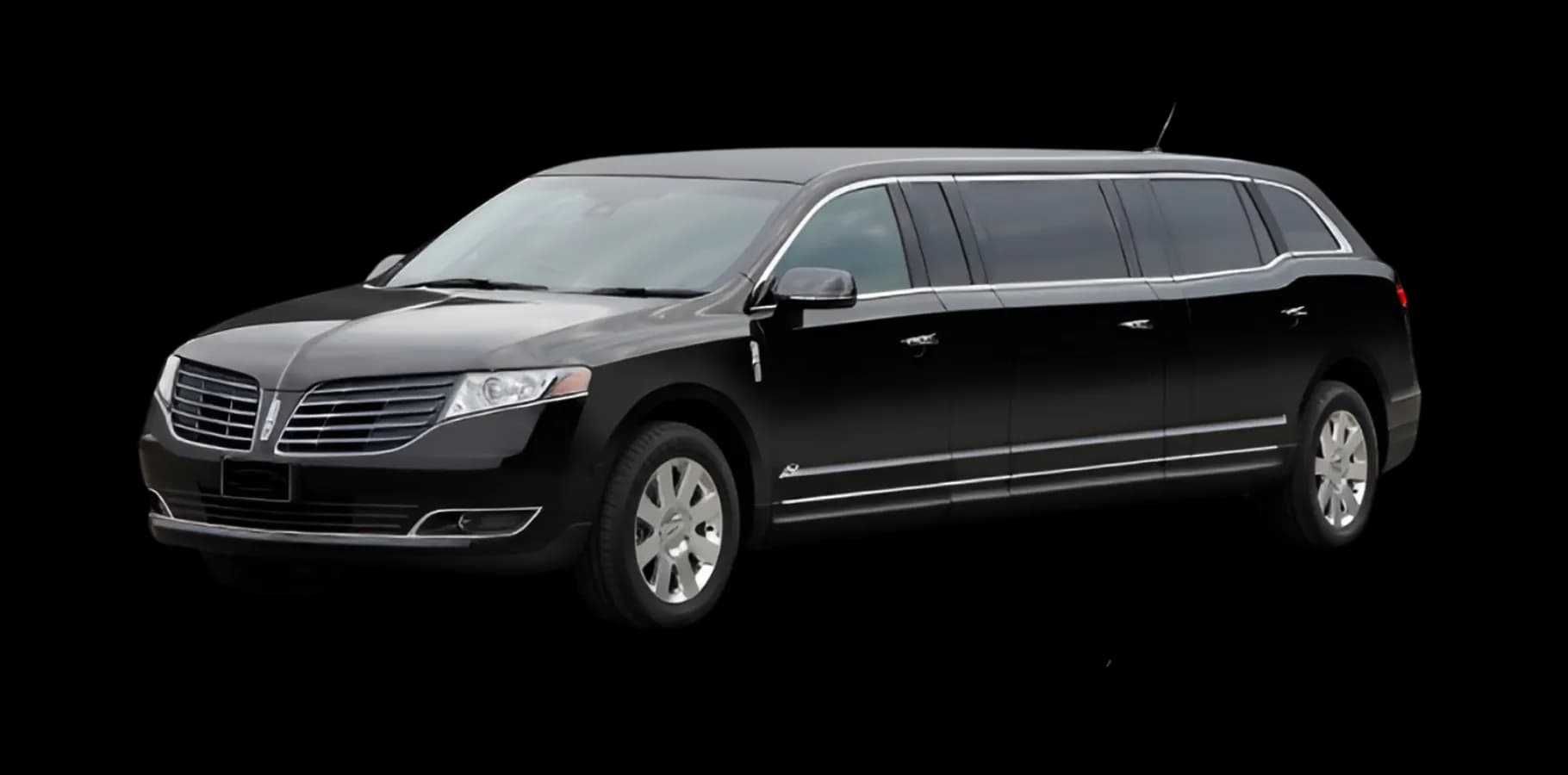
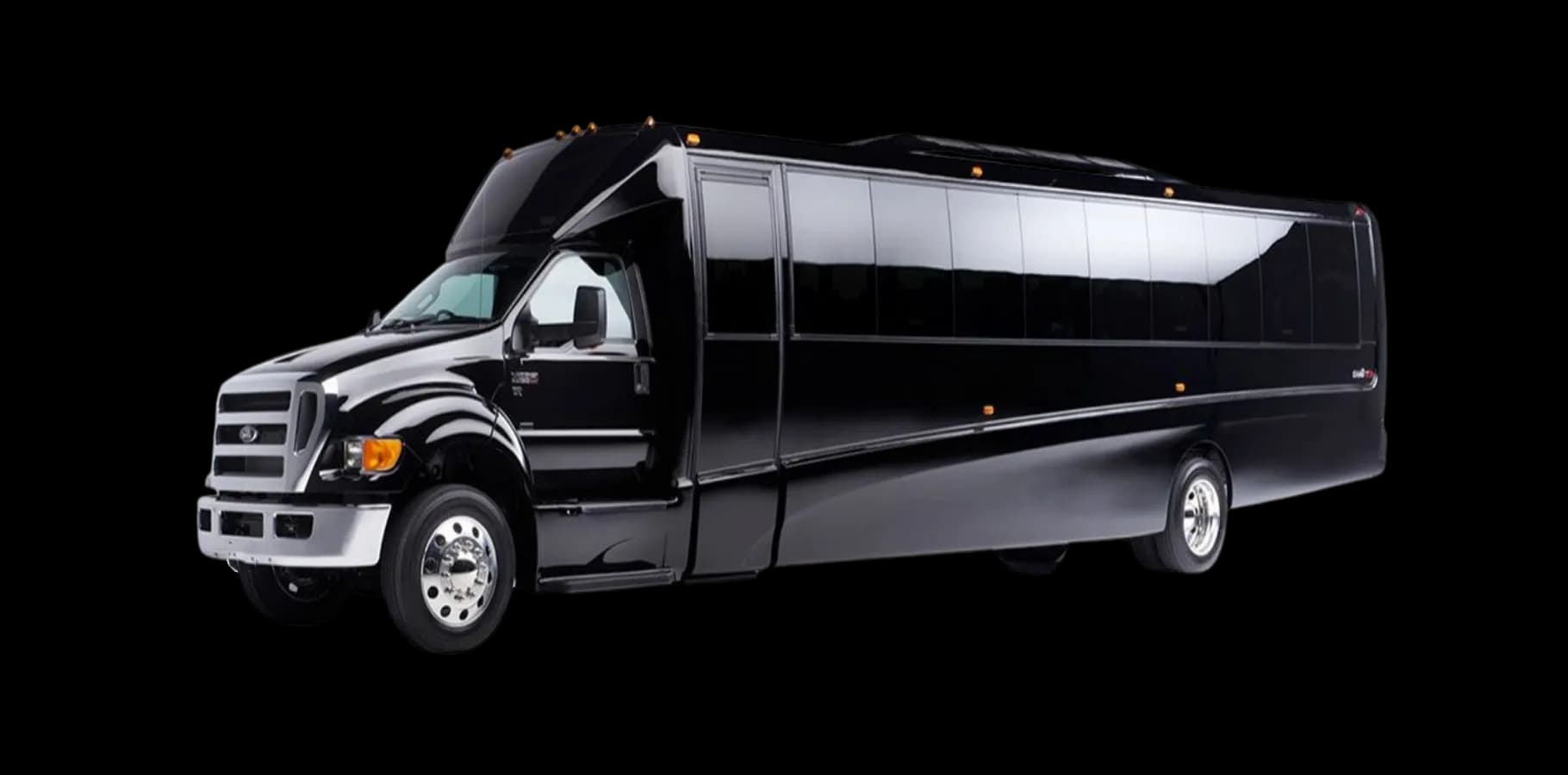
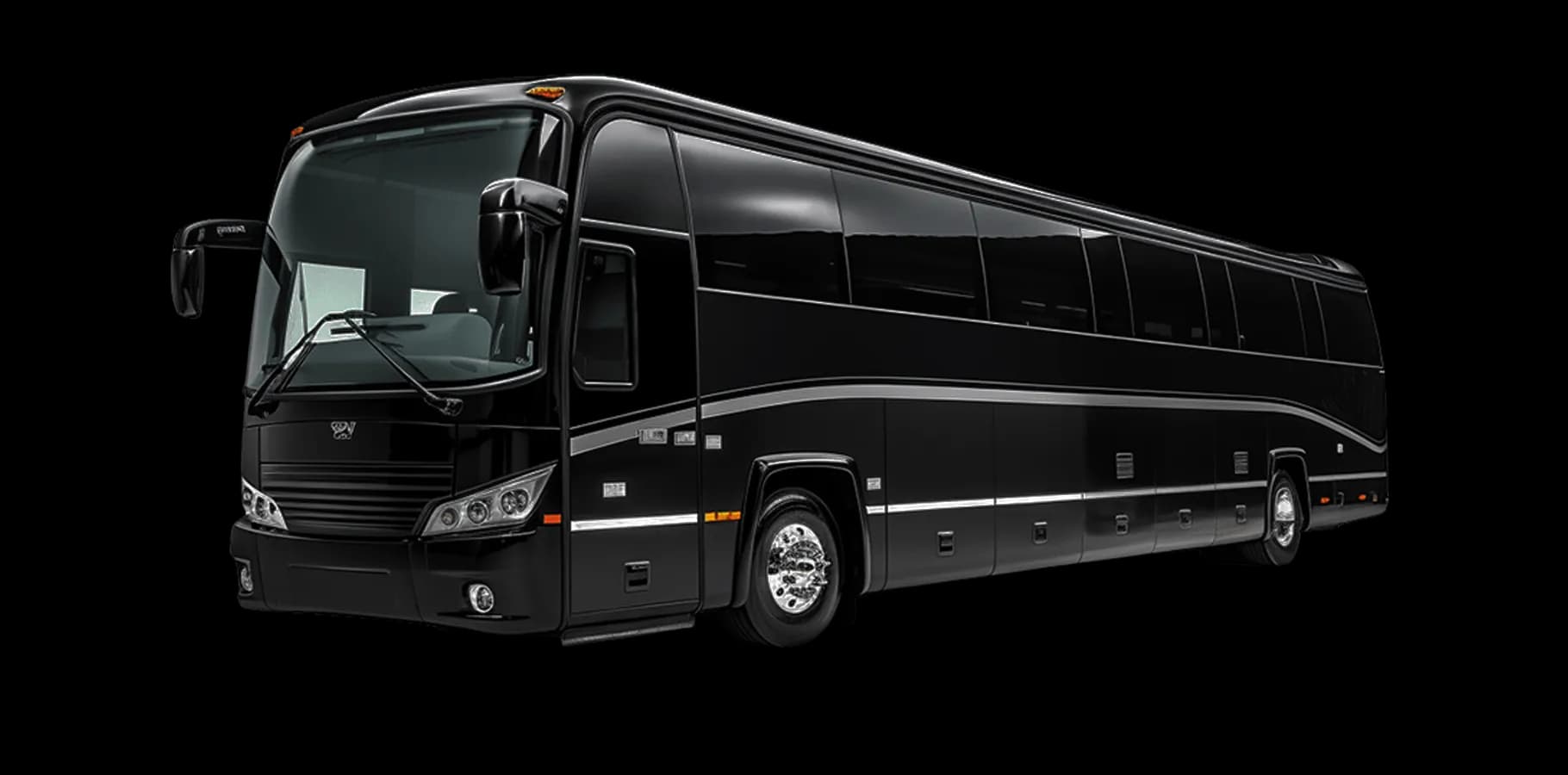
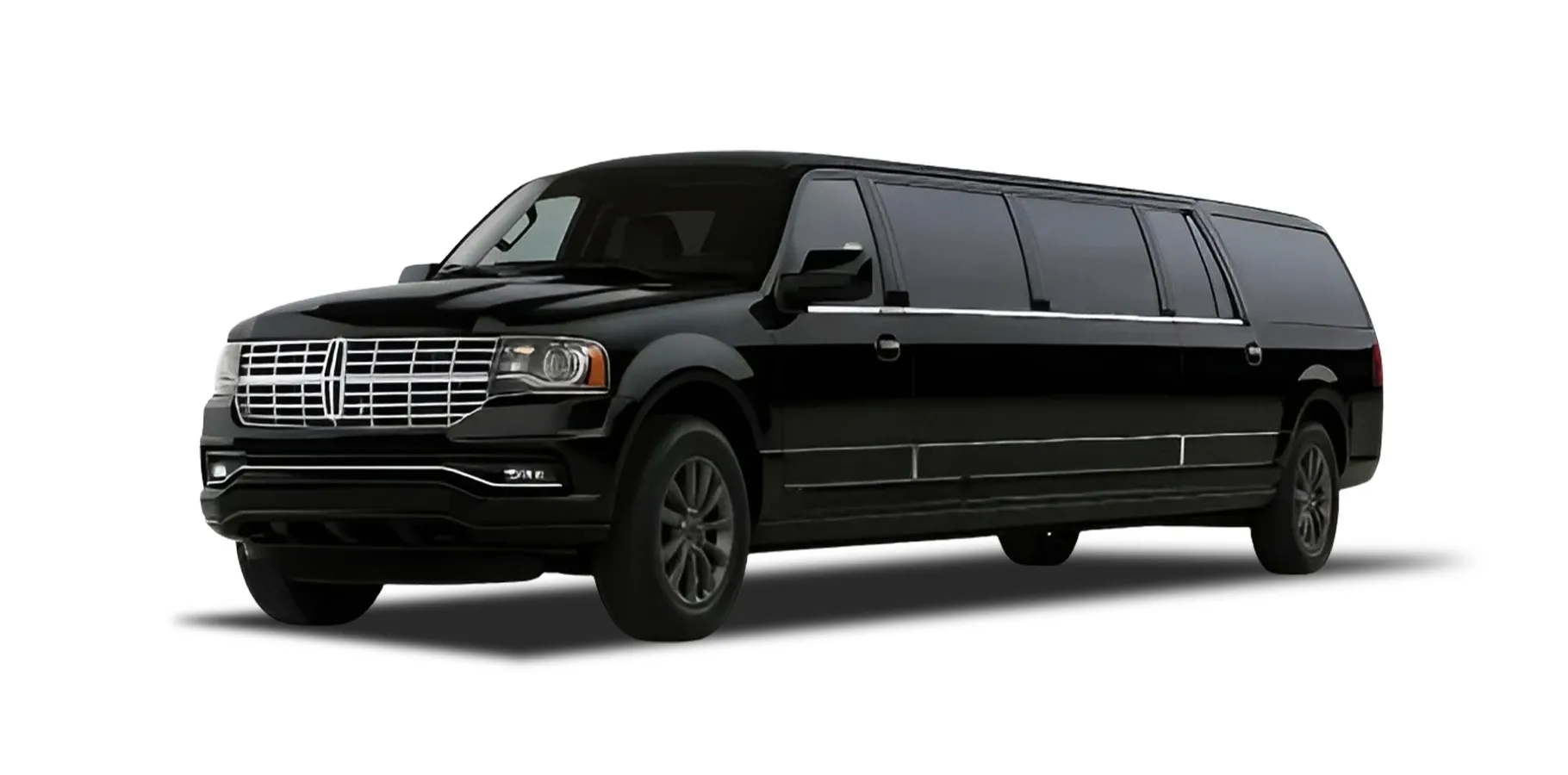
A professional ground transportation company serving New York City, the five boroughs, Long Island, New Jersey, Connecticut, and Pennsylvania must maintain a diverse fleet capable of accommodating everything from solo executive travel to 50-person conventions. Below is the comprehensive fleet guide detailing every vehicle type offered by Union Limousine, with real capacity figures, investment costs, hourly rate ranges, and the most appropriate use cases for each class.
|
Vehicle Type |
Capacity |
Vehicle Cost (New) |
Hourly Rate (NYC) |
Best For |
Key Features |
|
Luxury Sedan |
3–4 pax |
$80K – $120K |
$85 – $130/hr |
Executive travel, airport transfers, solo business trips |
Privacy partition, Wi-Fi, leather interior, bottled water |
|
Premium SUV |
5–7 pax |
$90K – $130K |
$100 – $160/hr |
Family travel, small groups, luggage-heavy airport runs |
Spacious cargo, captain seats, climate zones, USB charging |
|
Stretch Limousine |
8–12 pax |
$100K – $200K |
$150 – $250/hr |
Weddings, proms, anniversary, VIP nights out |
Wet bar, LED lighting, entertainment system, sunroof |
|
Sprinter Van |
10–14 pax |
$70K – $100K |
$120 – $180/hr |
Corporate shuttles, wine tours, airport groups |
Executive seating, overhead storage, climate control, AV system |
|
Party Bus |
20–30 pax |
$150K – $300K |
$200 – $450/hr |
Bachelor/bachelorette parties, birthdays, nightlife tours |
Dance floor, sound system, LED dance lights, built-in bar |
|
Mini Charter Bus |
24–35 pax |
$120K – $180K |
$160 – $280/hr |
Wedding guests, corporate offsites, school events |
Reclining seats, PA system, luggage bays, AC |
|
Full-Size Charter Bus |
40–56 pax |
$350K – $500K |
$250 – $450/hr |
Conventions, large tours, stadium events, multi-city |
Restroom, overhead bins, entertainment screens, Wi-Fi |
The cumulative capital cost of maintaining even a modest fleet across all seven categories can exceed $2.5 million in vehicle investments. Add insurance, maintenance, and depreciation, and fleet operations represent the single largest cost center in the chauffeur industry — a reality directly reflected in service pricing.
What Makes Each Vehicle Category Worth Its Rate?
Luxury Sedans
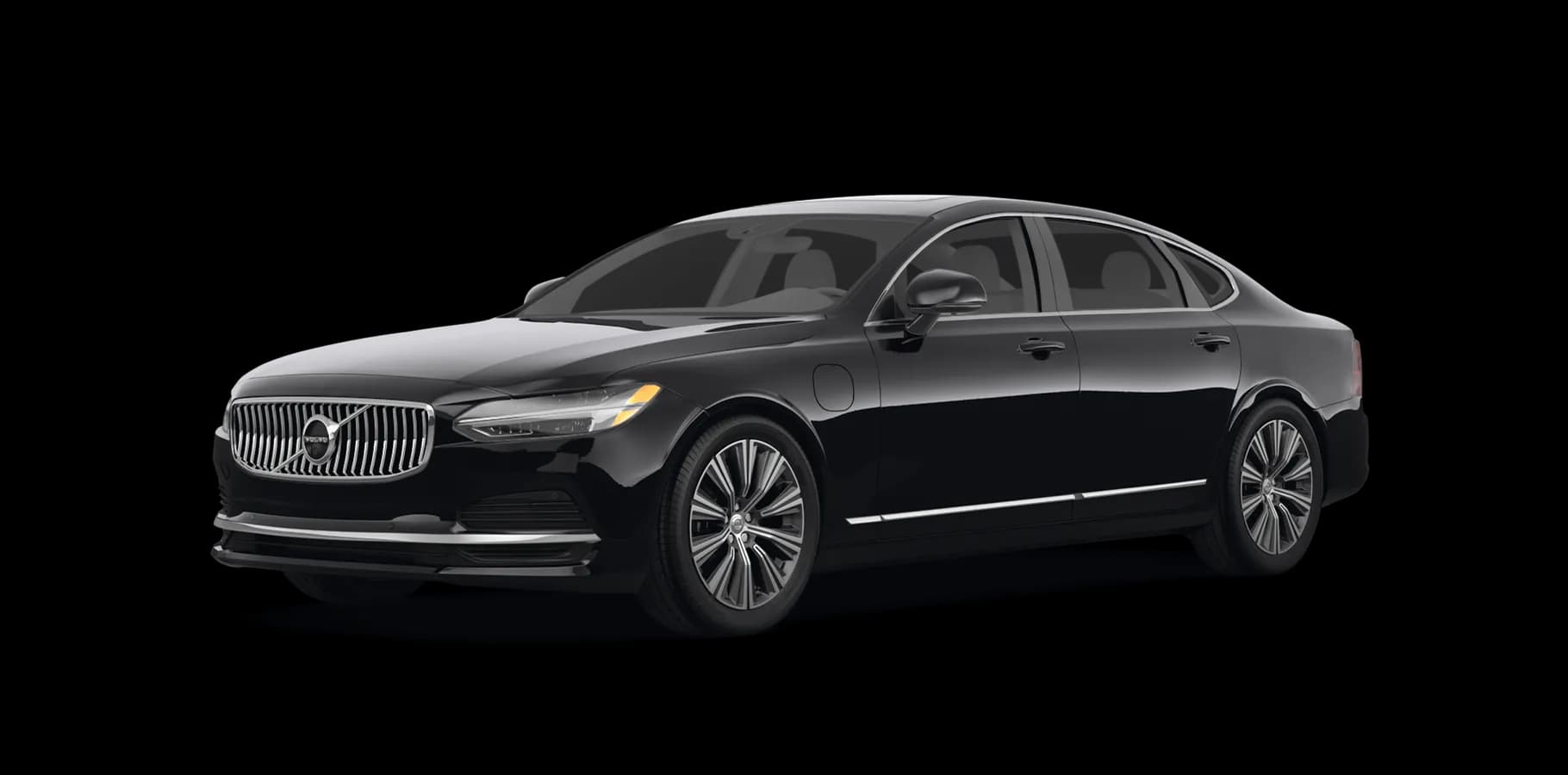
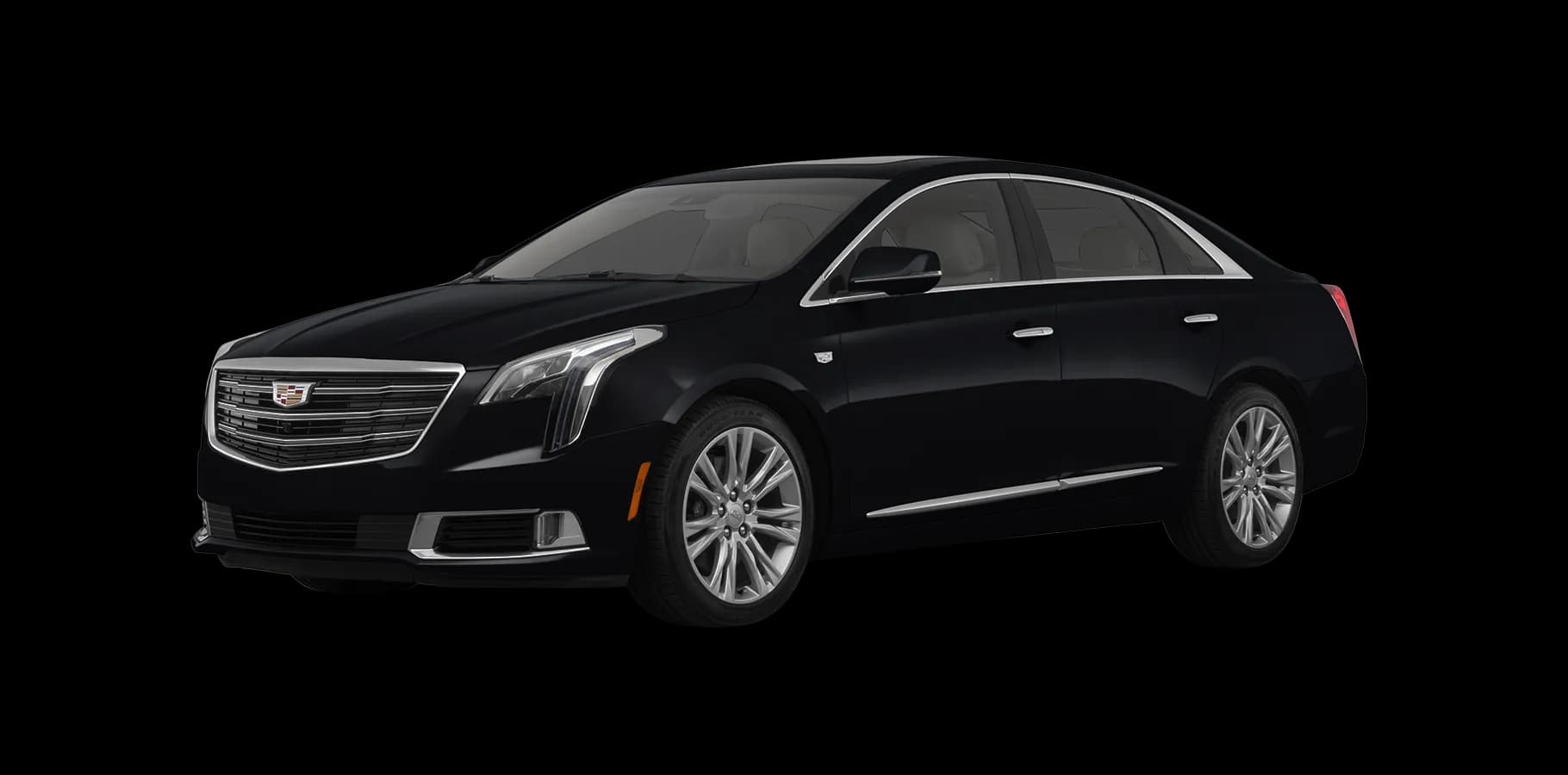
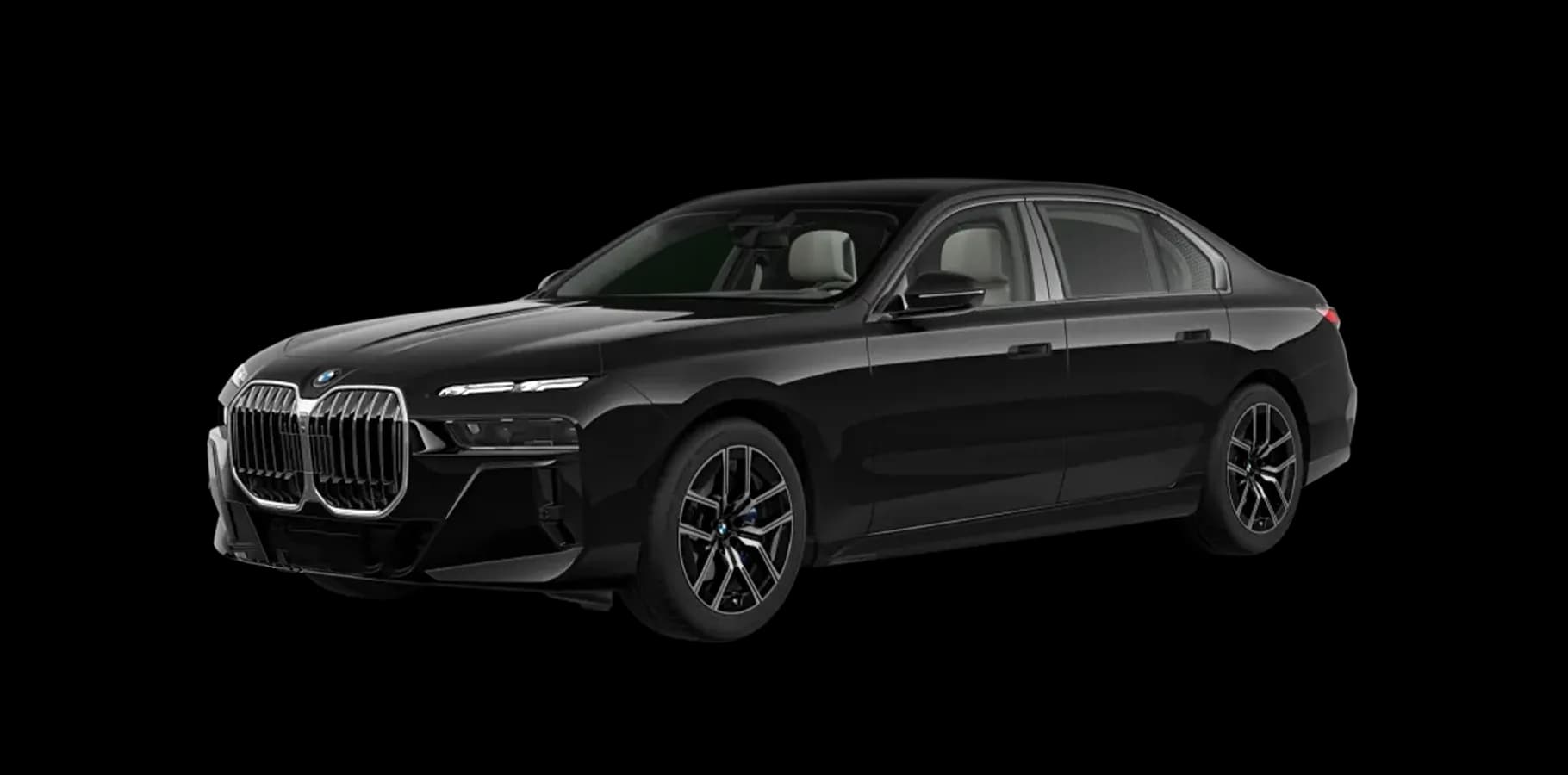
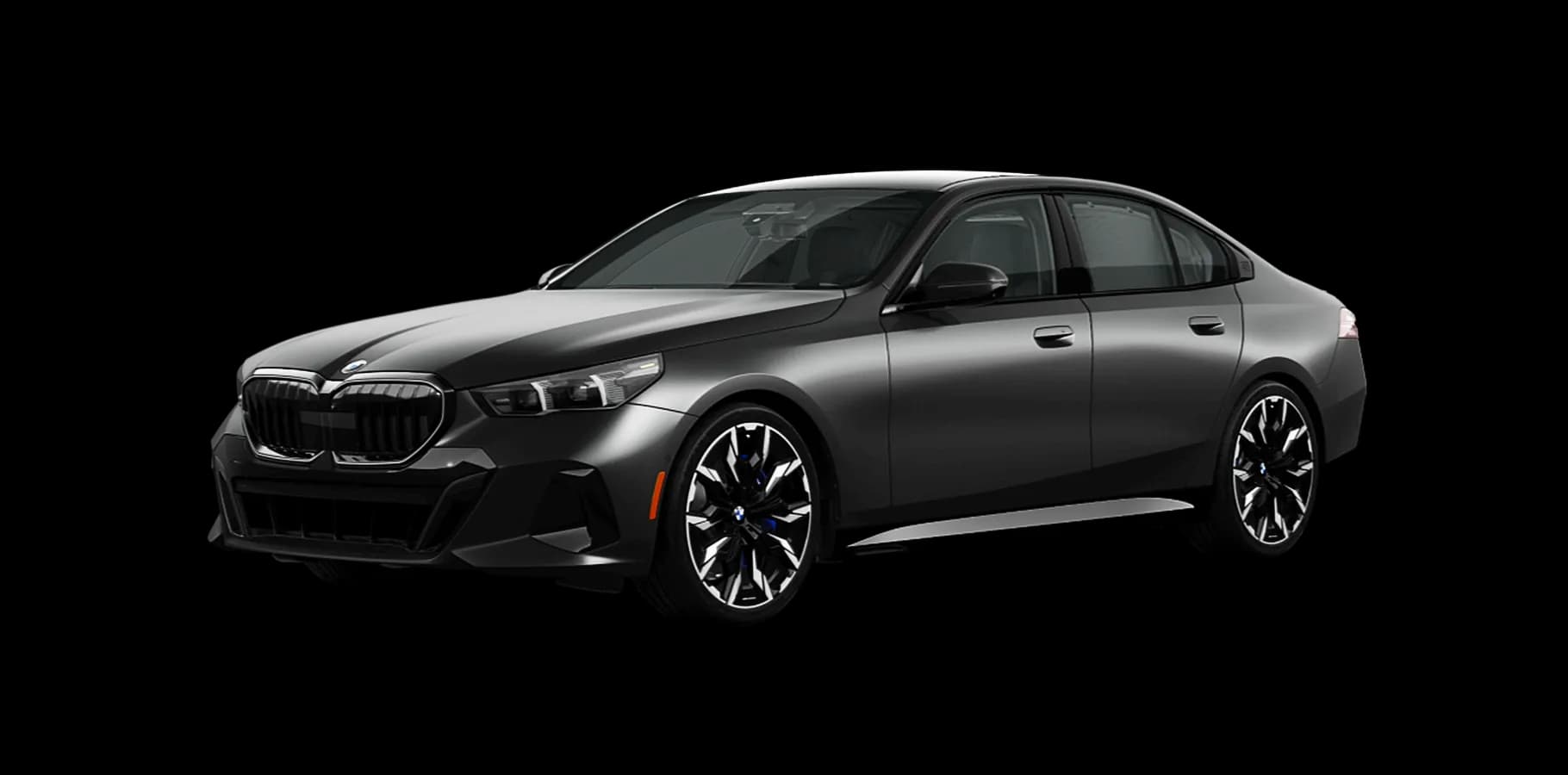
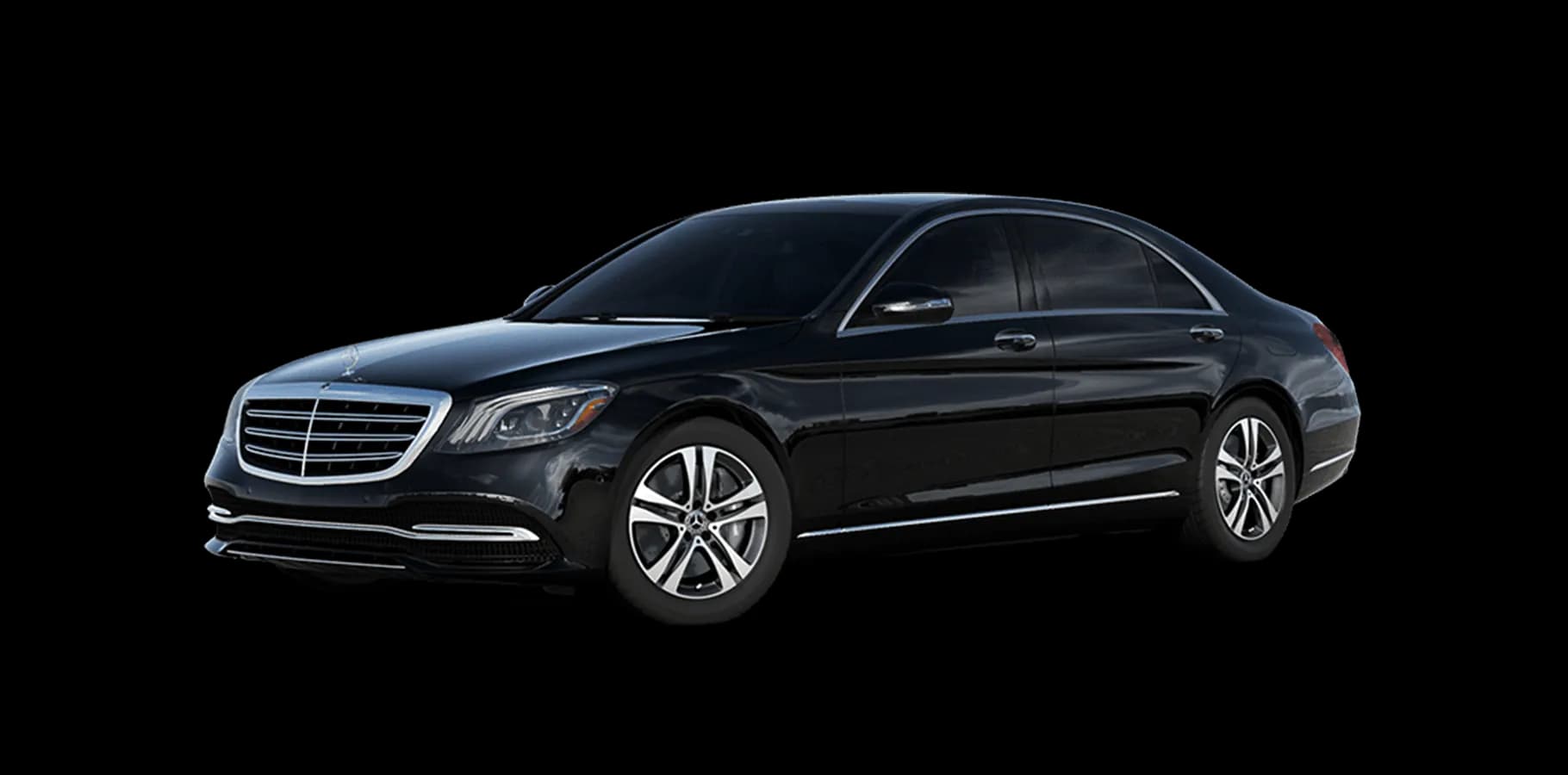
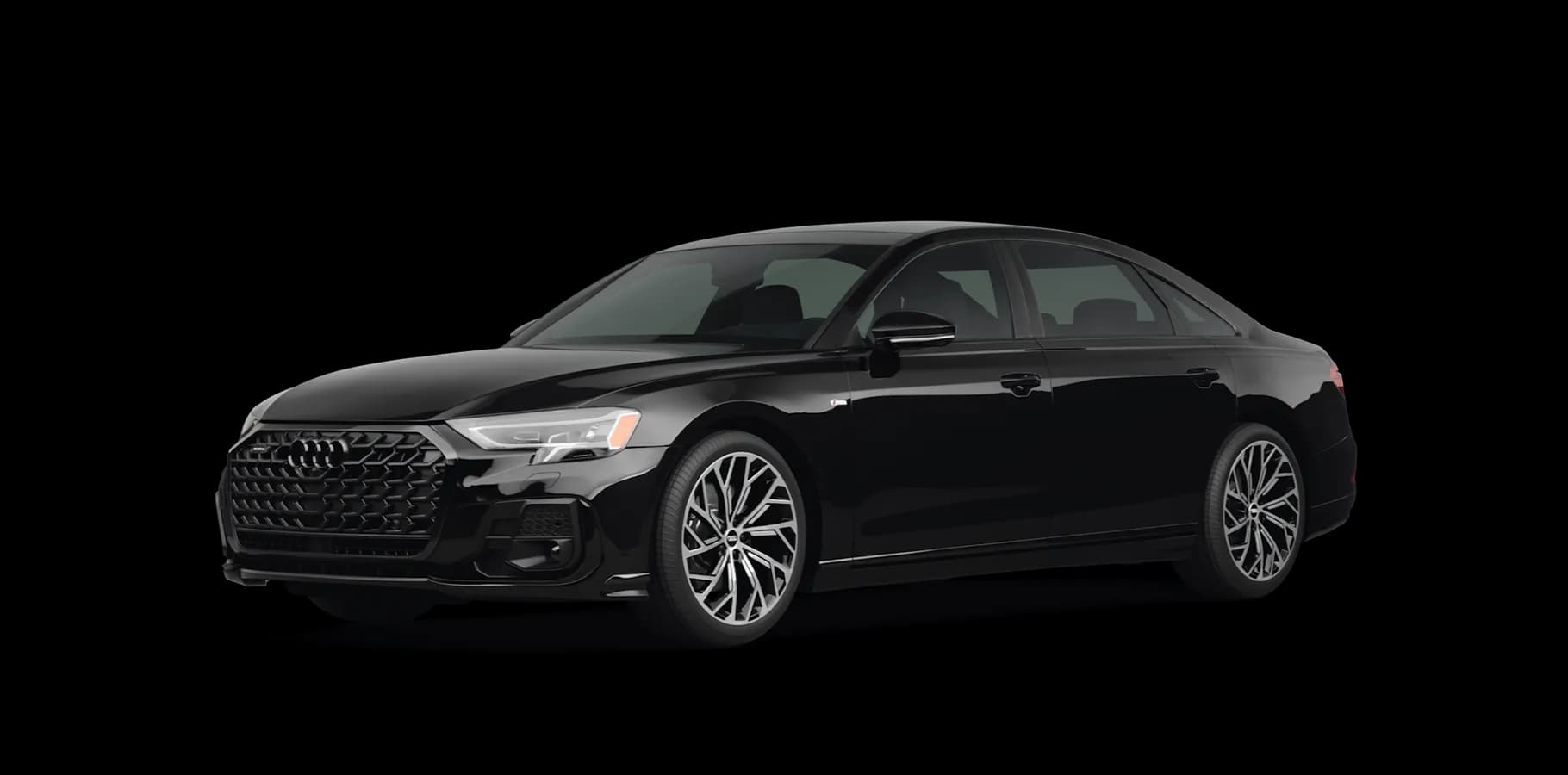
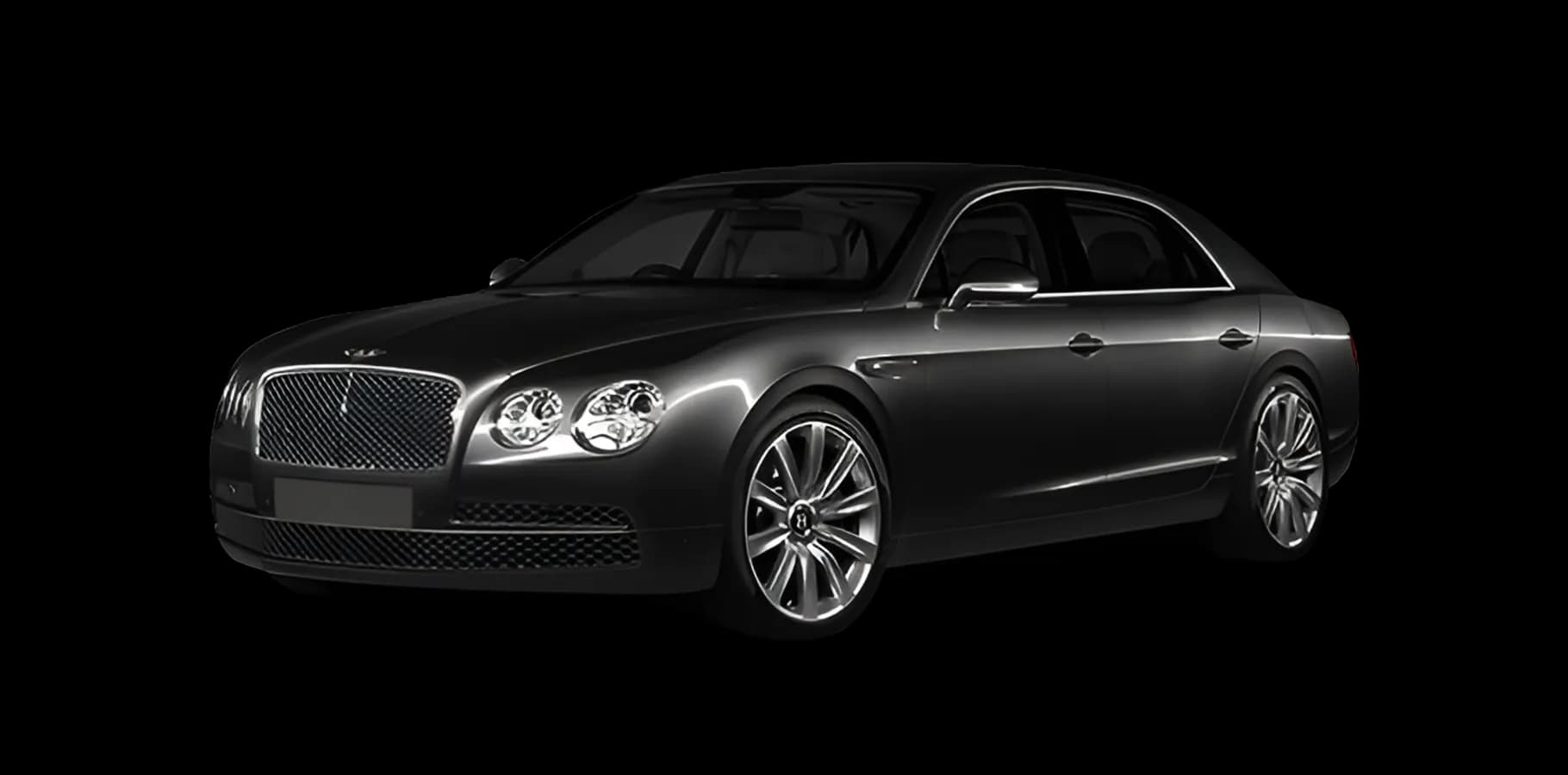
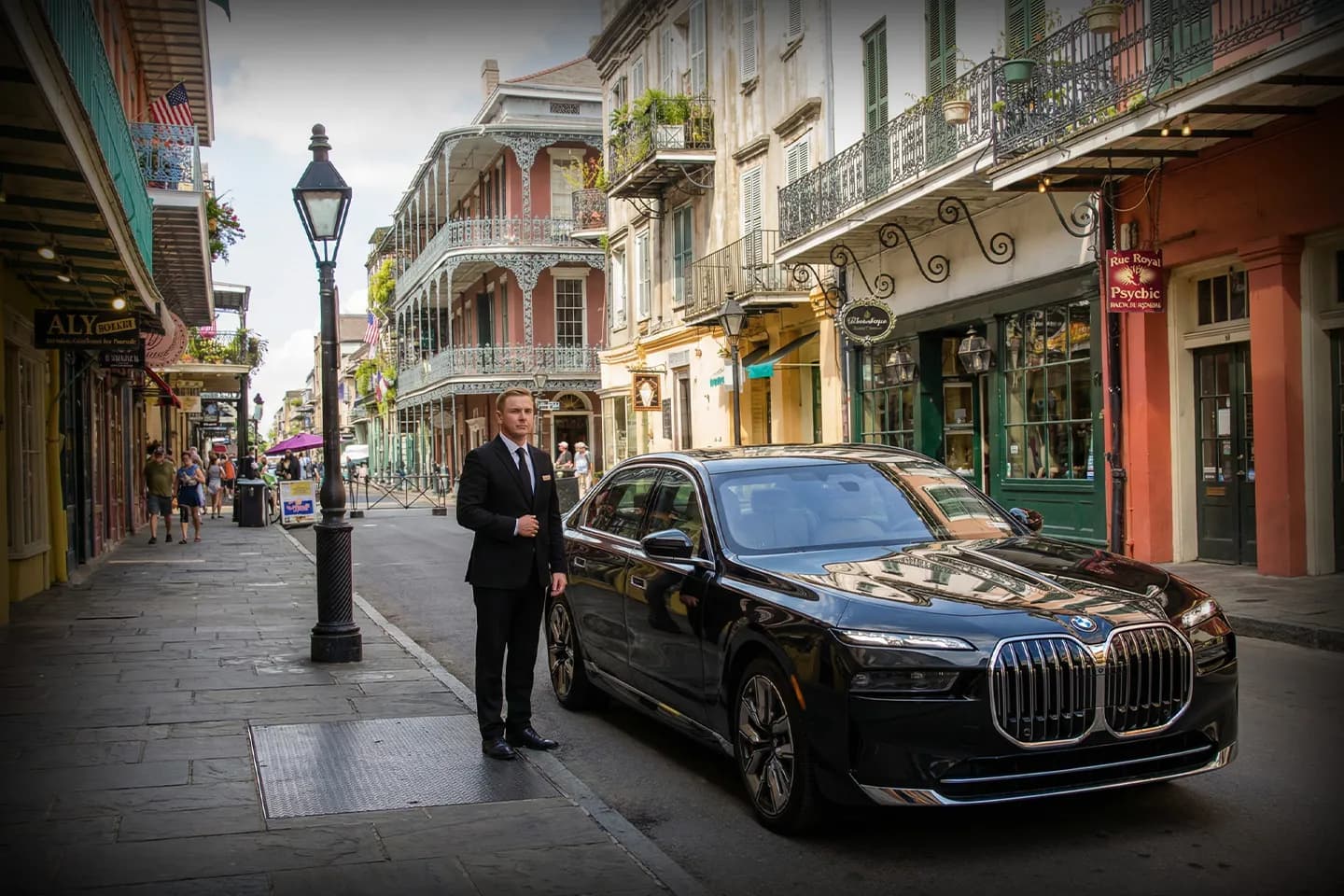
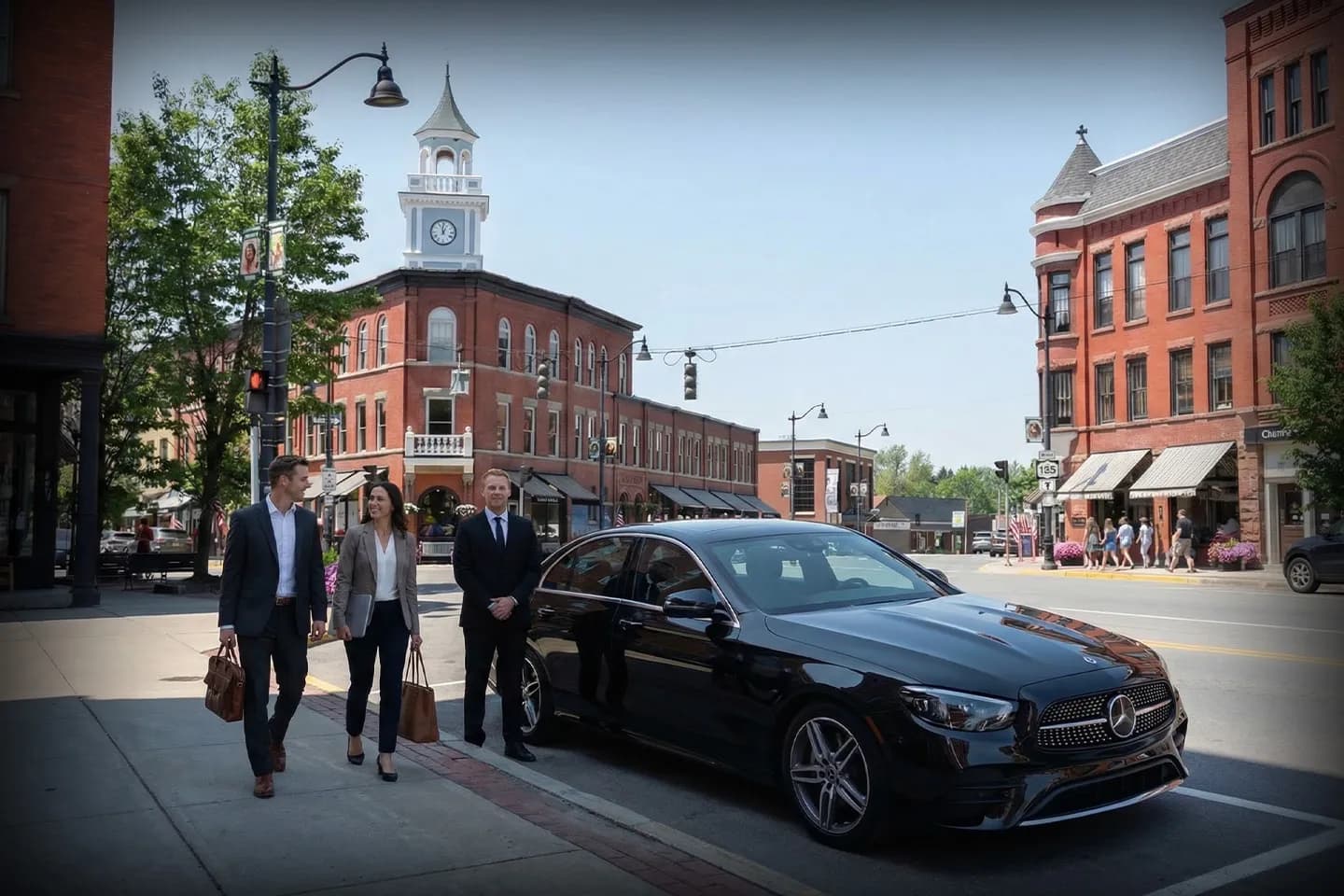
Sedans such as the Mercedes-Benz S-Class, BMW 7-Series, Cadillac CT6, and Lincoln Continental represent the gold standard of point-to-point professional transportation. These vehicles undergo twice-monthly full-detail cleanings, weekly mechanical checks, and carry amenity packages including chilled water, phone chargers, breath mints, and reading materials. Air filtration systems are maintained to HEPA standards in many premium sedans, a feature increasingly important to health-conscious executives. For clients who need a quiet, private space to prepare for meetings or decompress after flights, the sedan experience is unmatched.
Premium SUVs
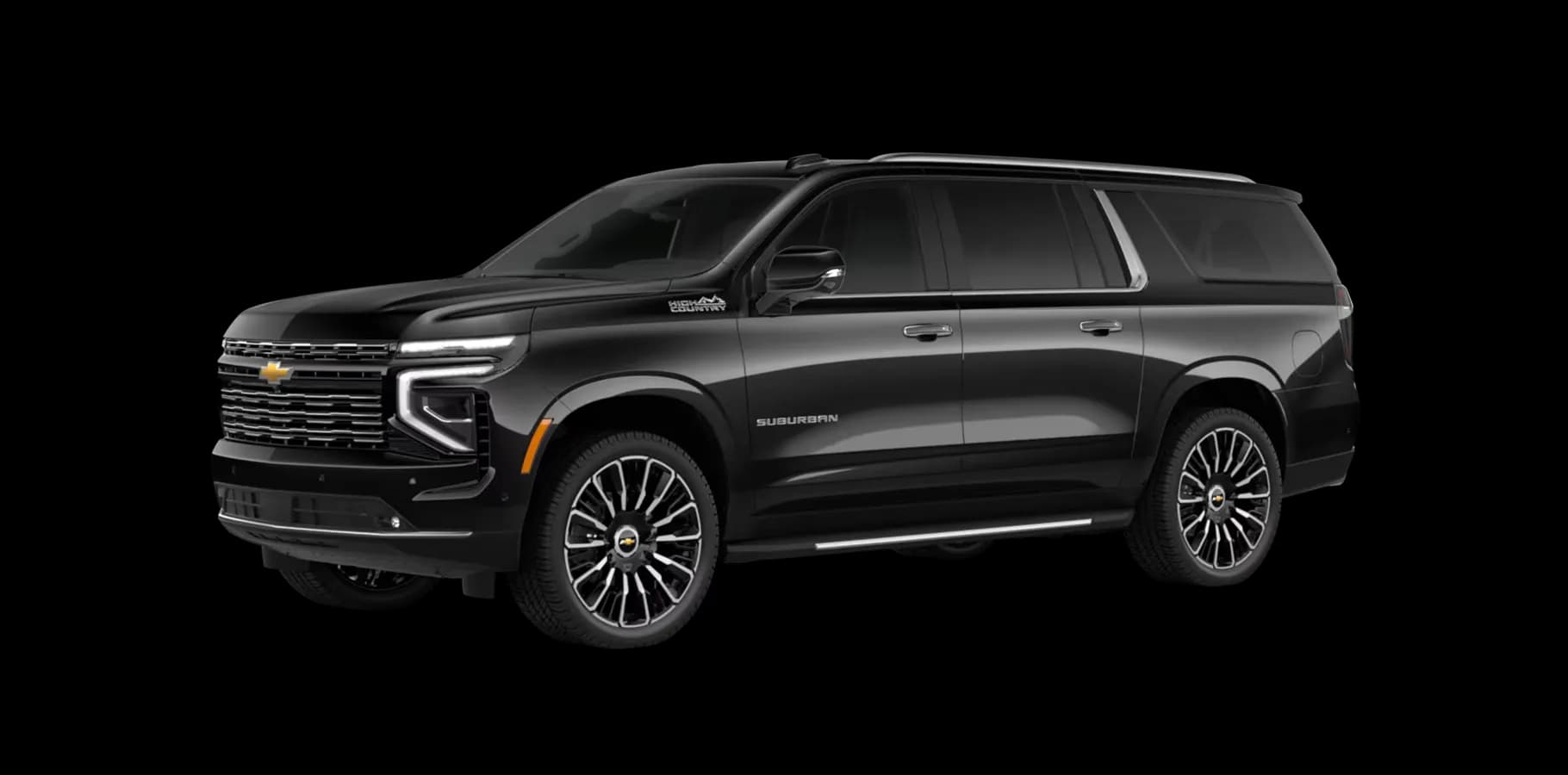
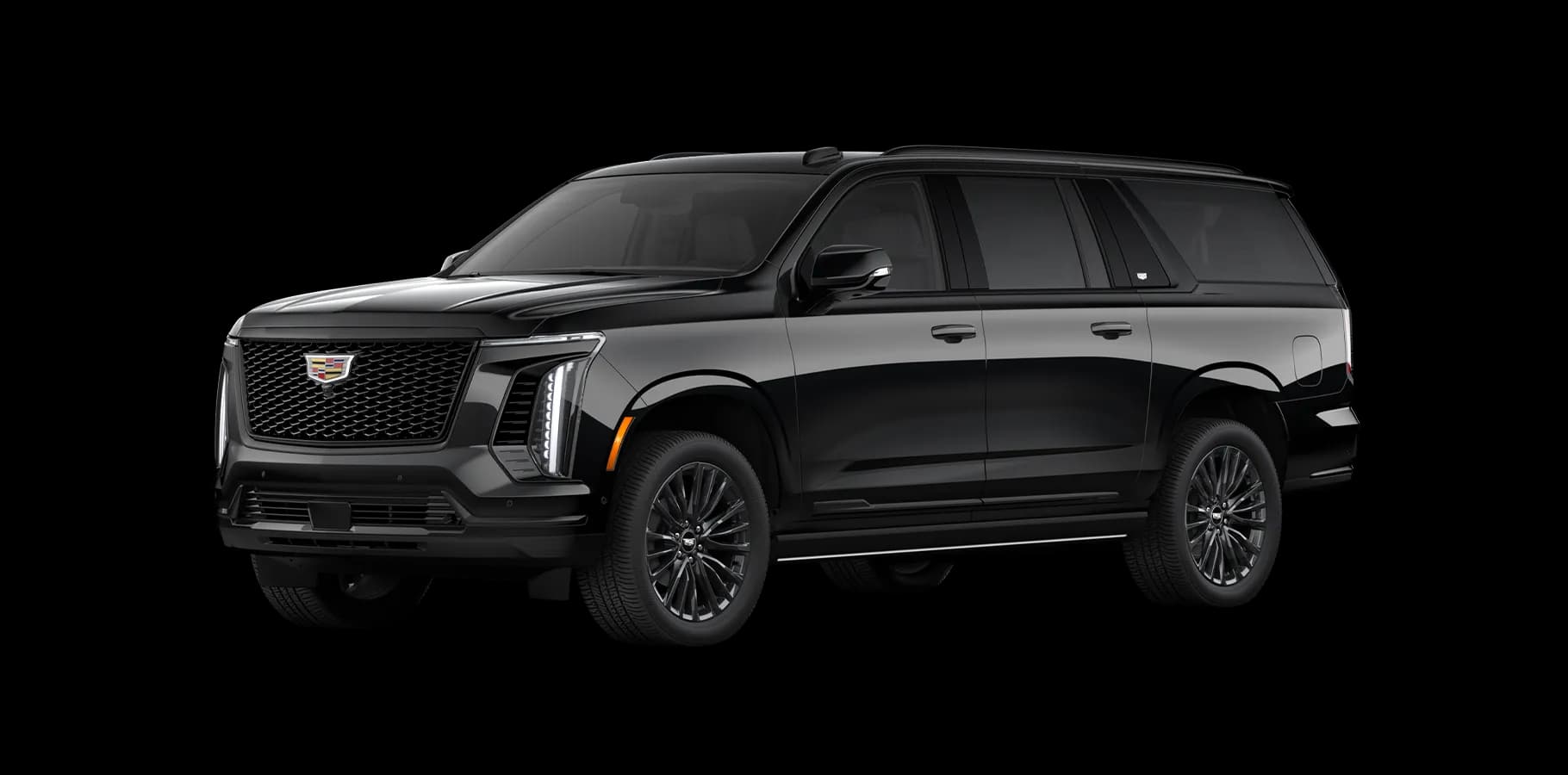
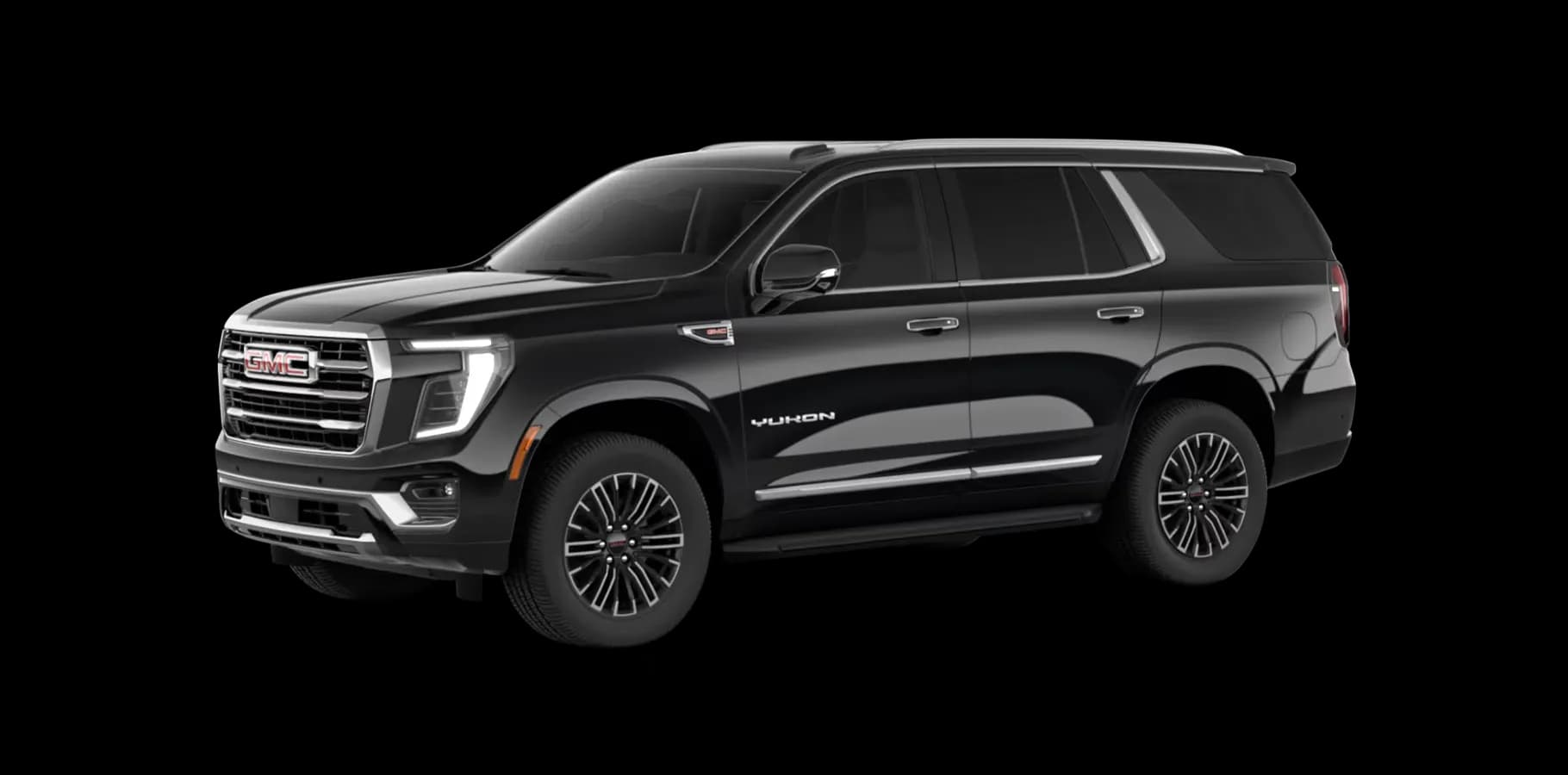
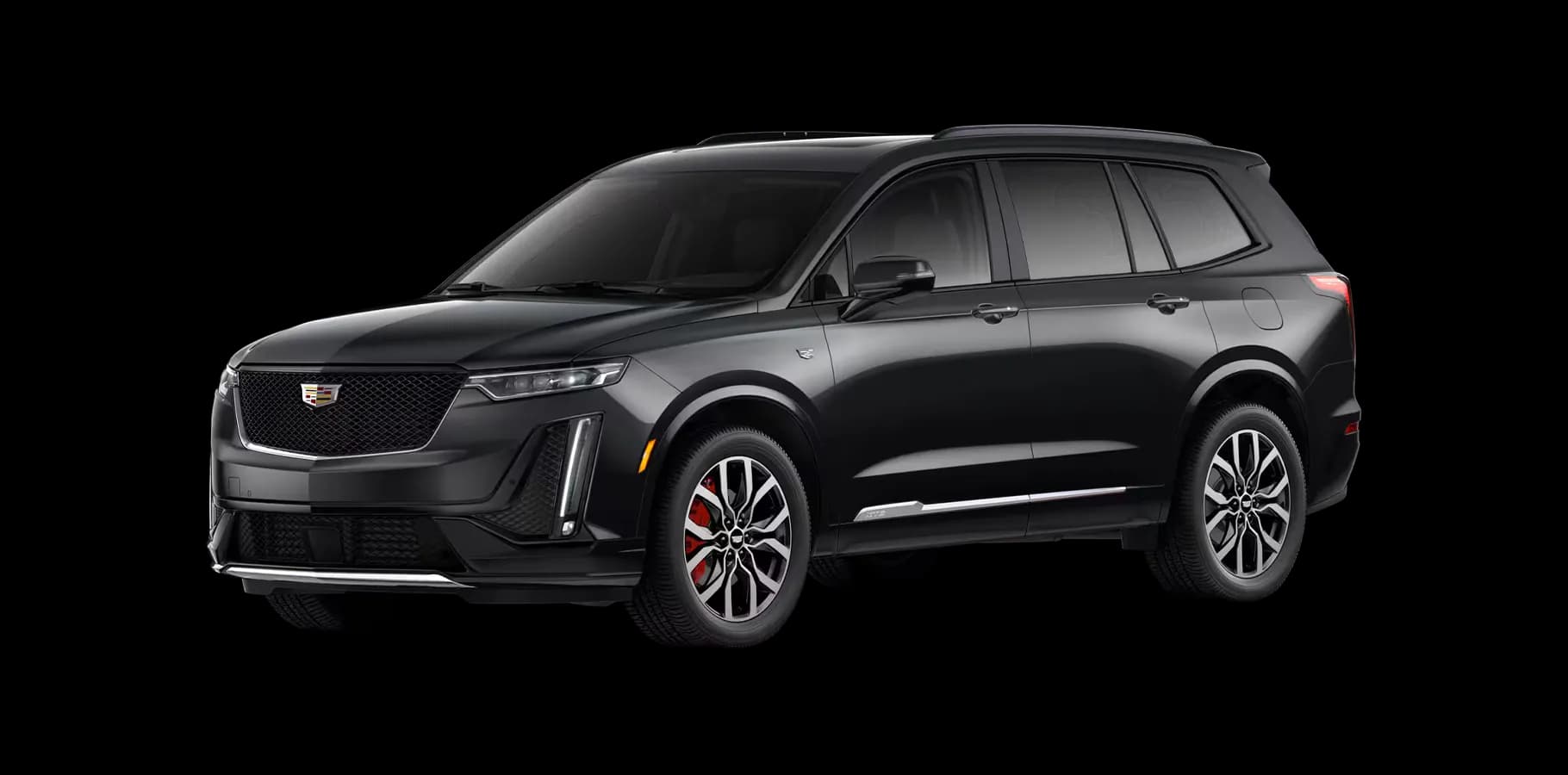
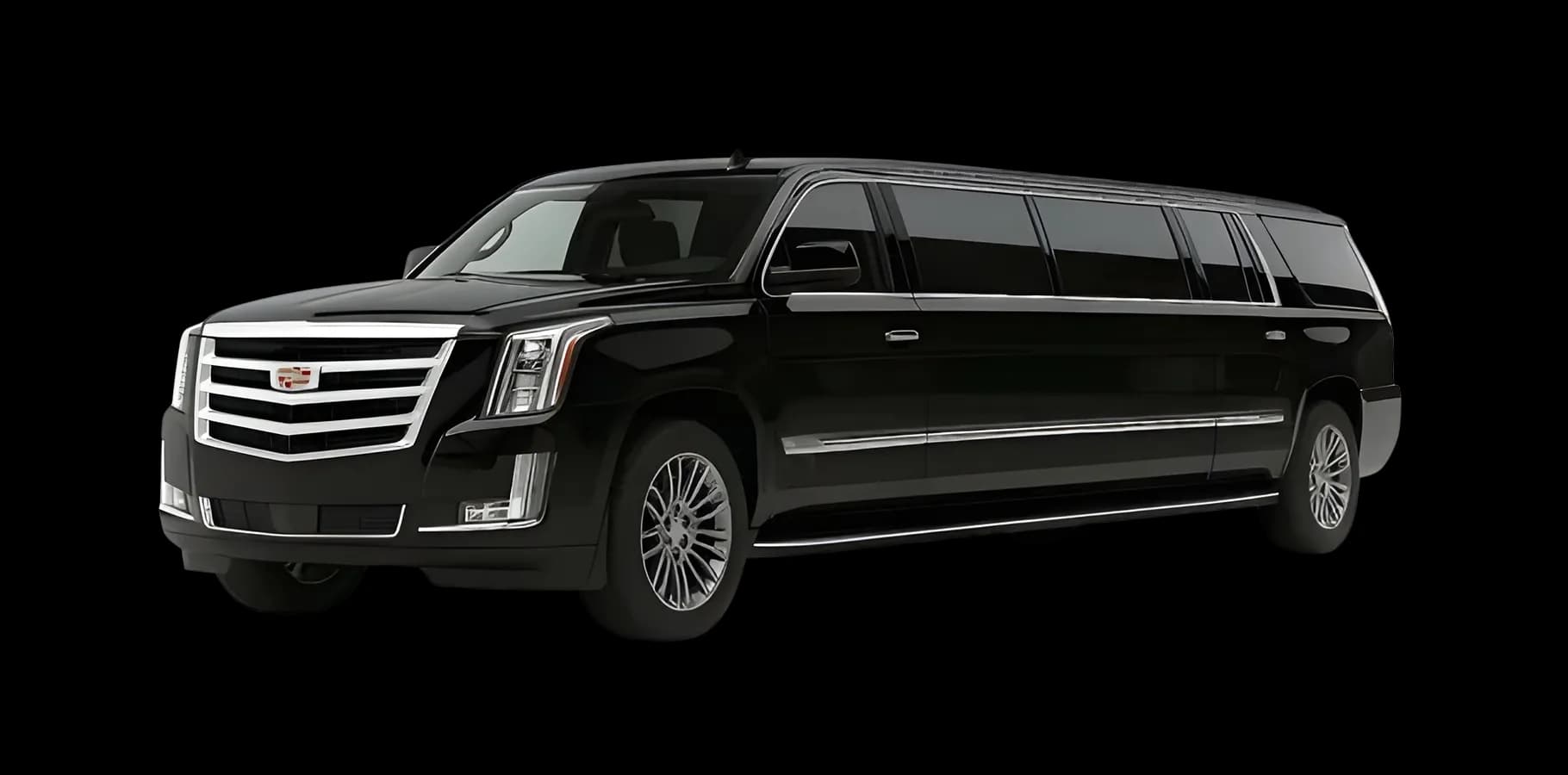
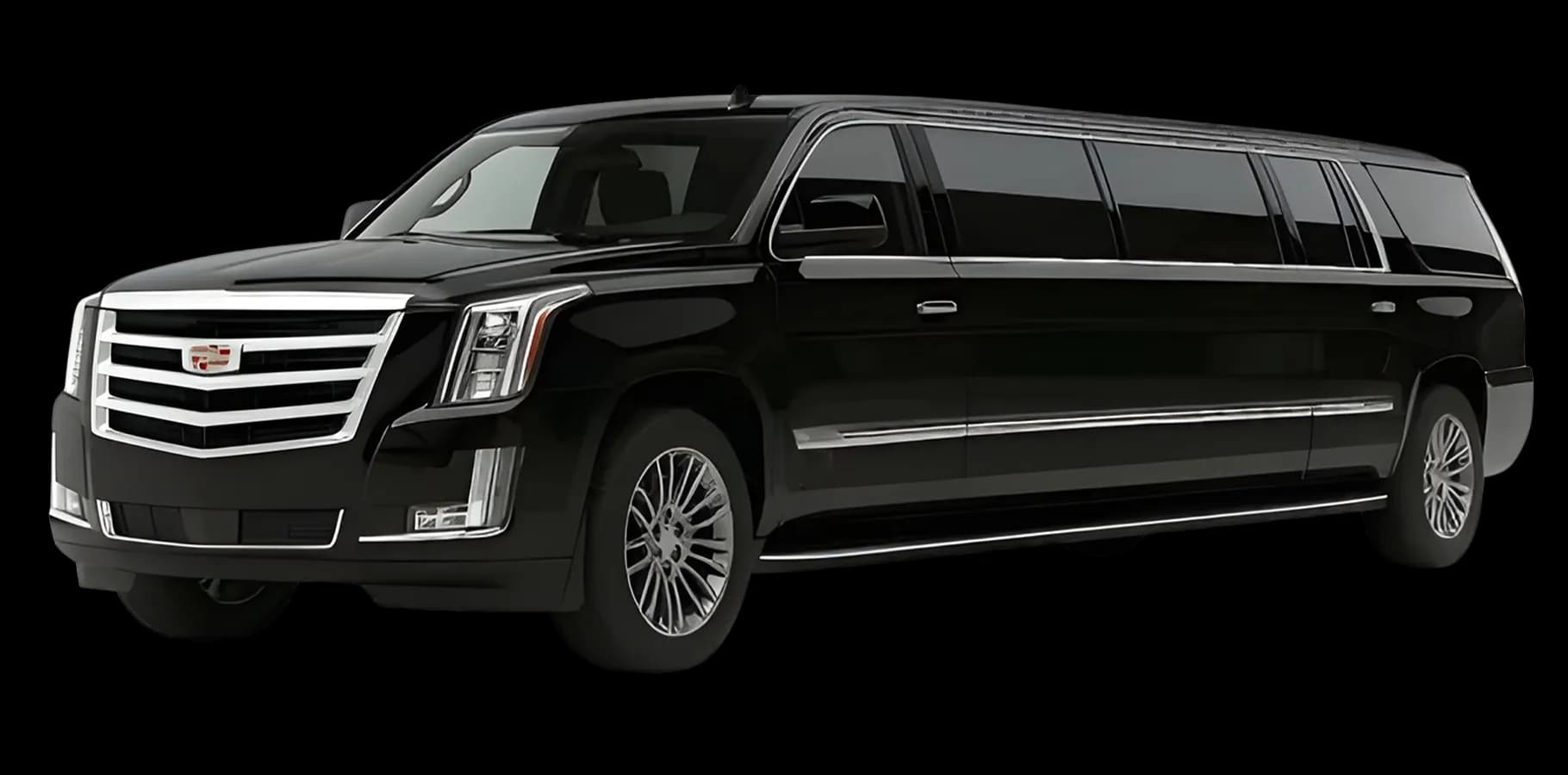
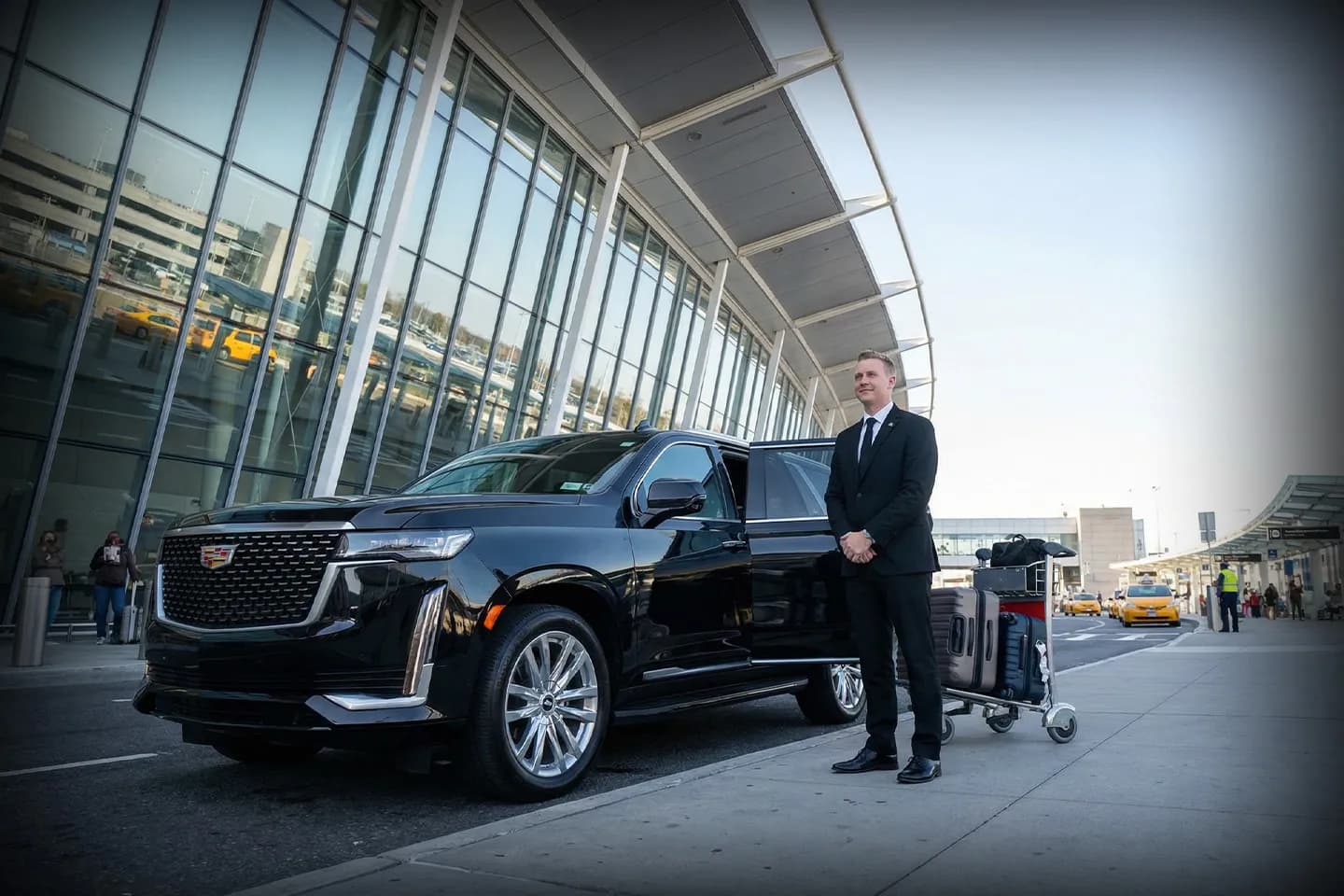
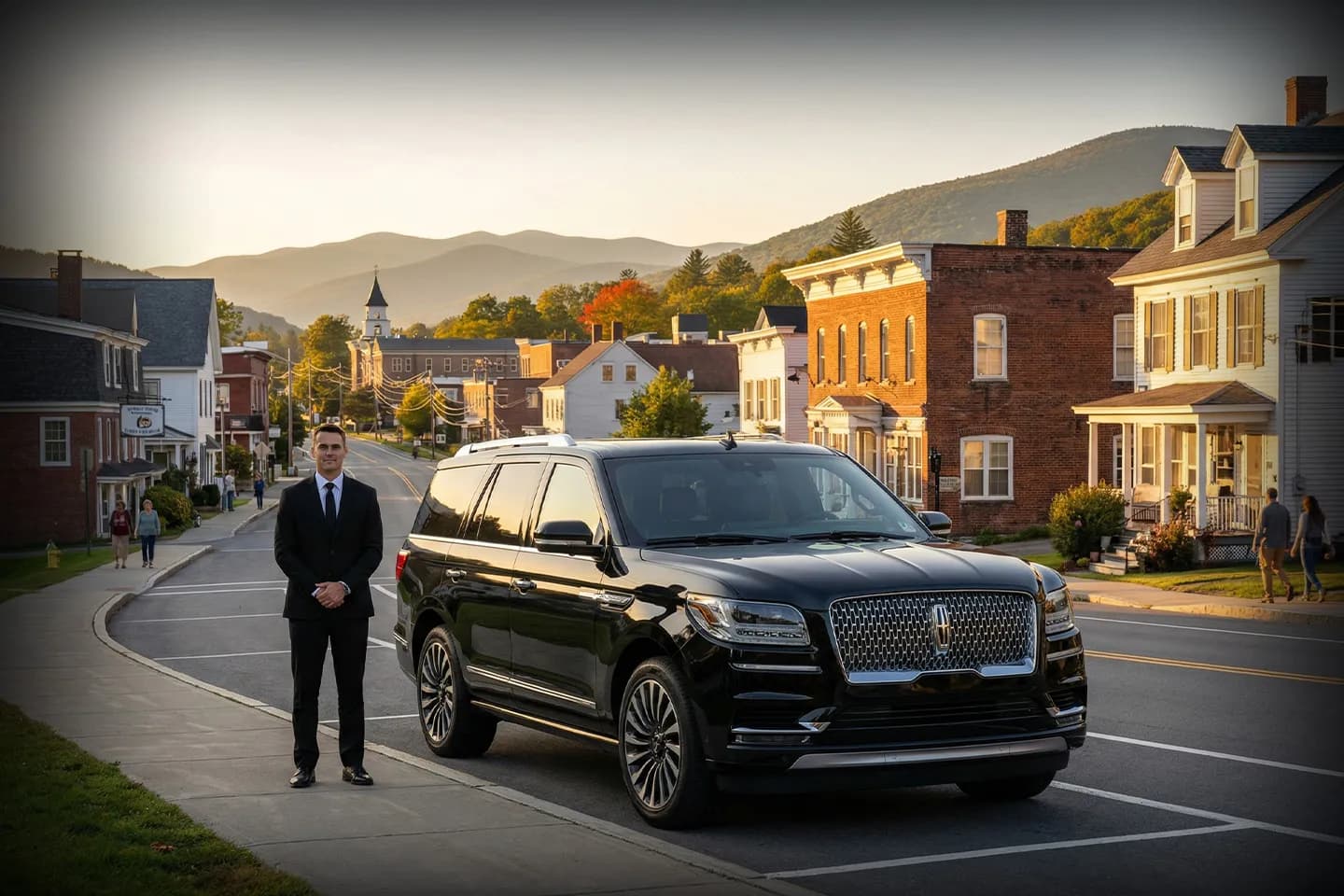
The Cadillac Escalade, Lincoln Navigator, and Mercedes-Benz GLS-Class offer the sedan's service quality scaled up for families, small groups, or individuals with extensive luggage. Captain chairs in second and third rows provide individual comfort, dual climate zones maintain personalized temperatures, and cargo areas accommodate full-size golf bags, multiple suitcases, or large event supplies. For LaGuardia to Long Island routes where families travel with children, strollers, and luggage, the SUV is the practical premium choice.
Stretch Limousines
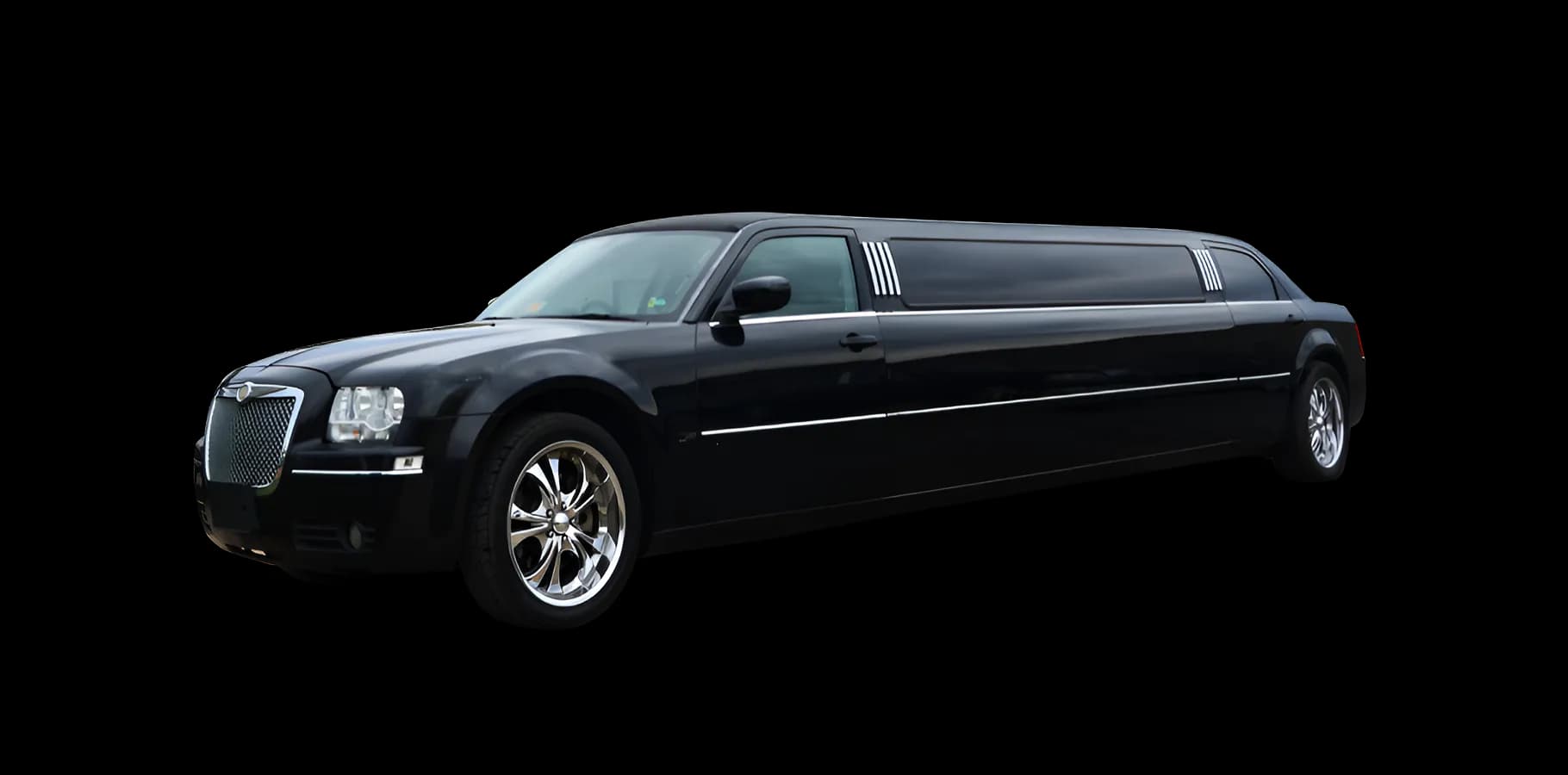
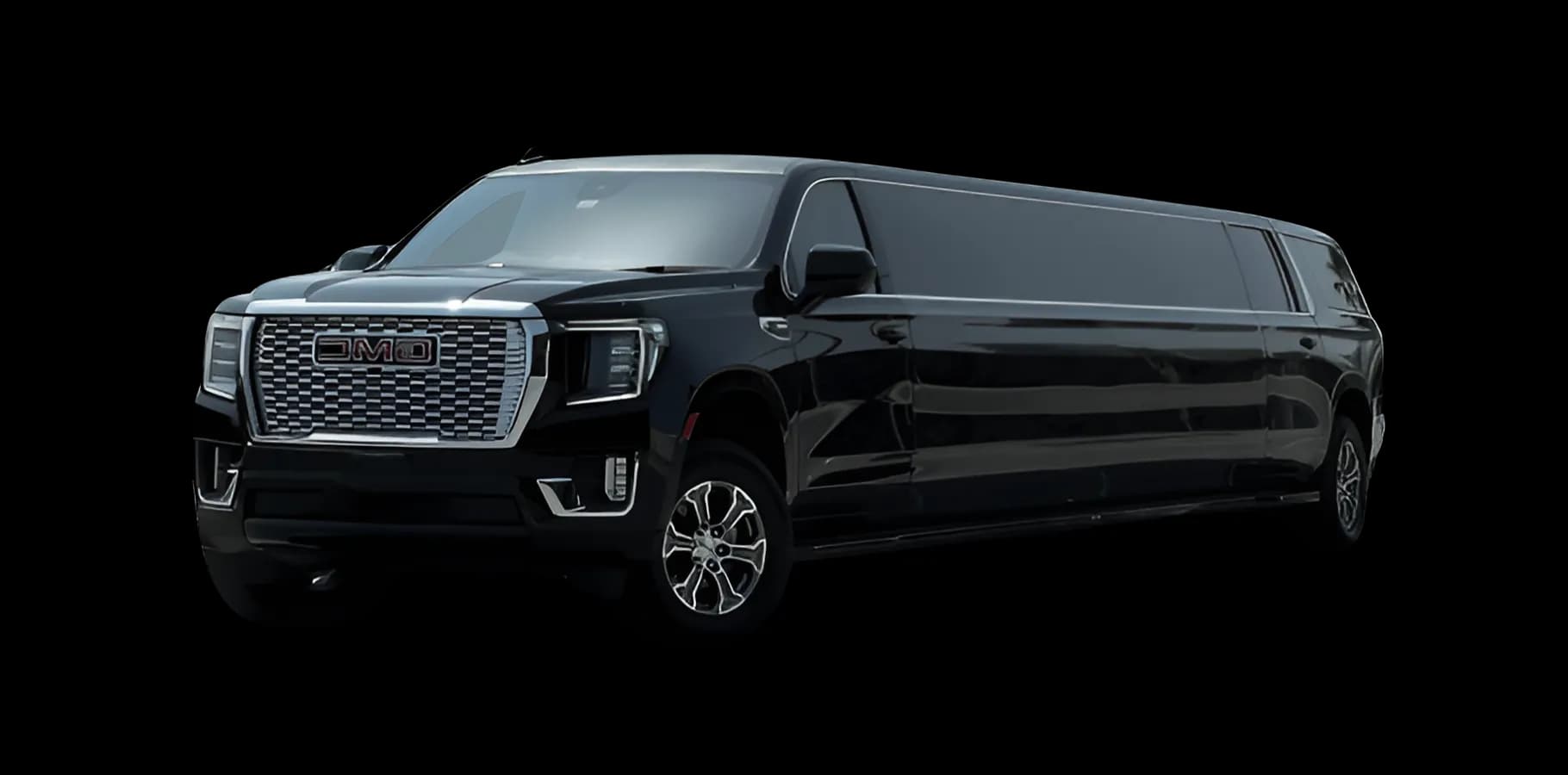
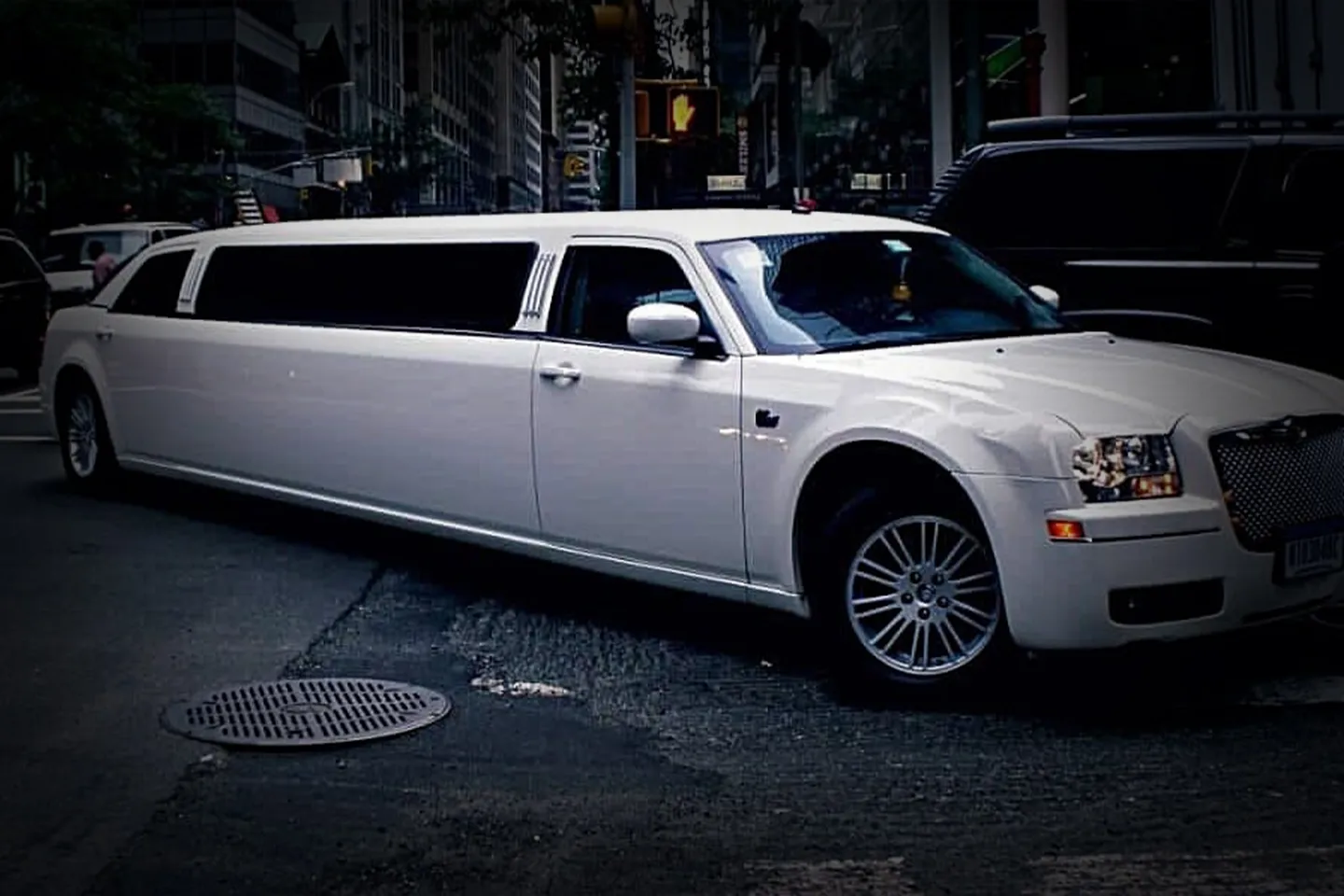
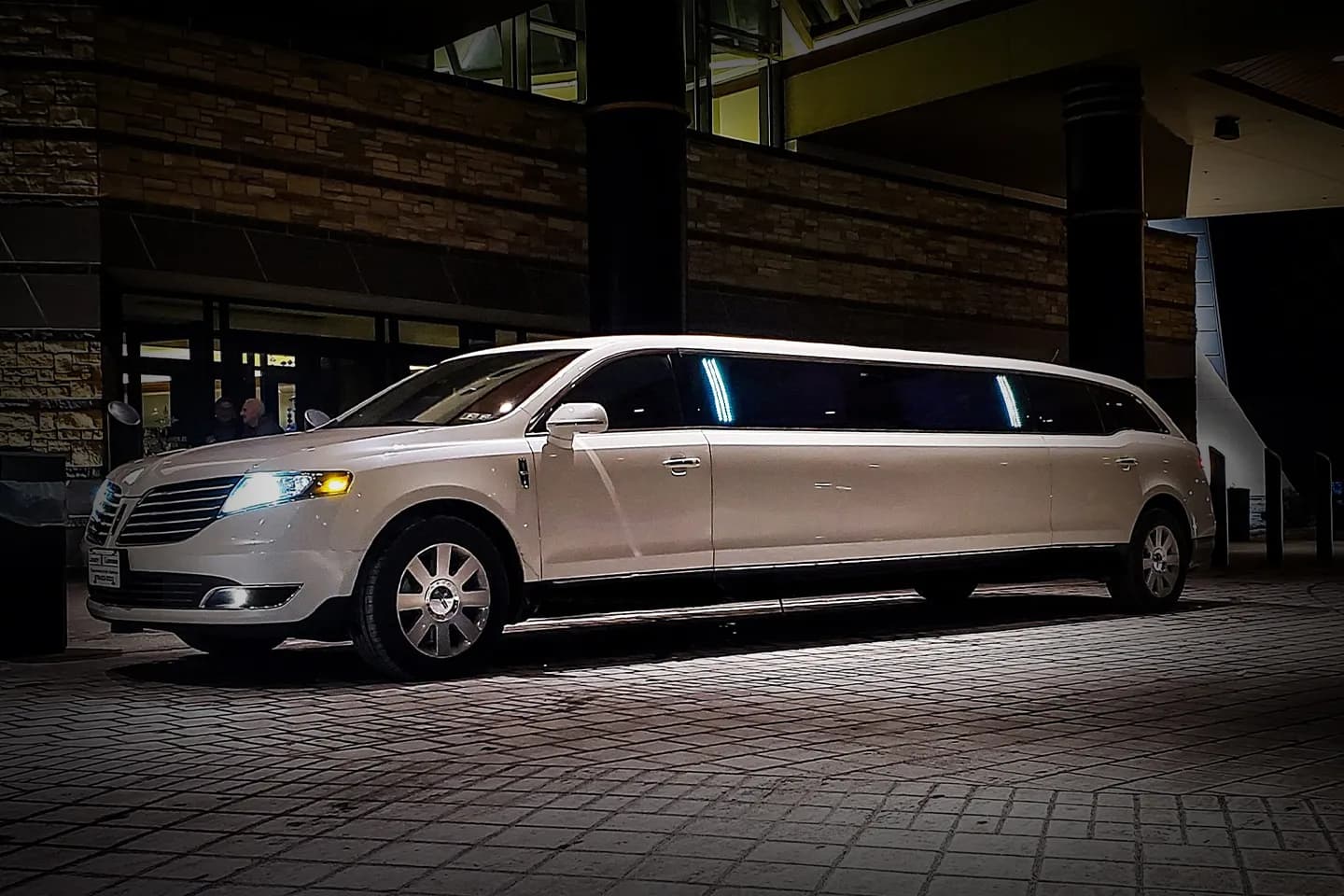
Custom-built stretch limousines represent one of the highest-investment vehicles in any fleet. Beyond the $100,000–$200,000 vehicle cost, stretches require specialized certification, maintenance by technicians trained on custom chassis, and intensive cleaning protocols given their entertainment use. The interior experience — wraparound seating, full wet bar, surround-sound systems, fiber-optic lighting, and privacy glass — transforms transportation into an event in itself. For weddings, proms, and milestone celebrations, nothing else delivers the same combination of visual impact and group intimacy.
Sprinter Vans
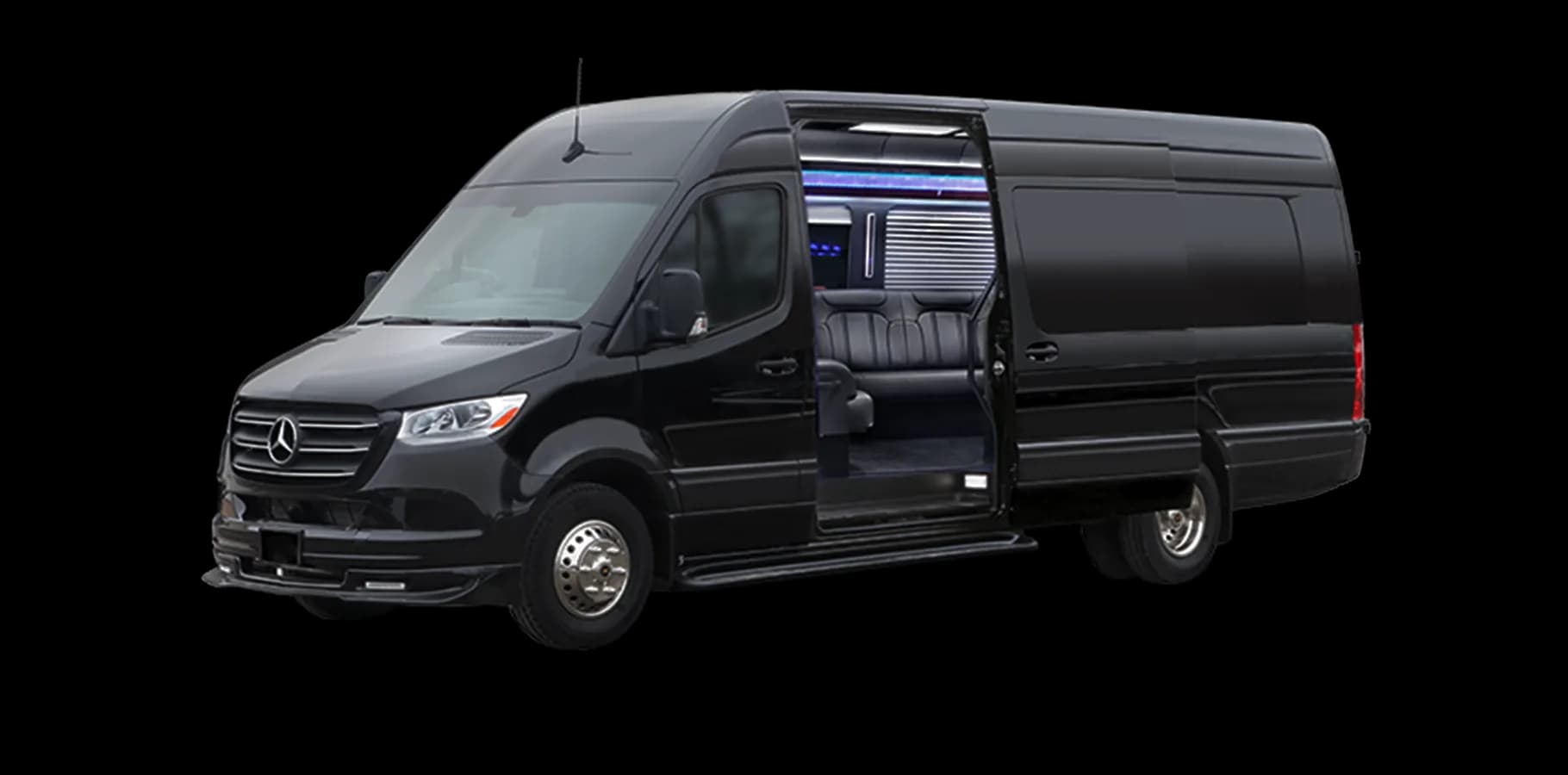
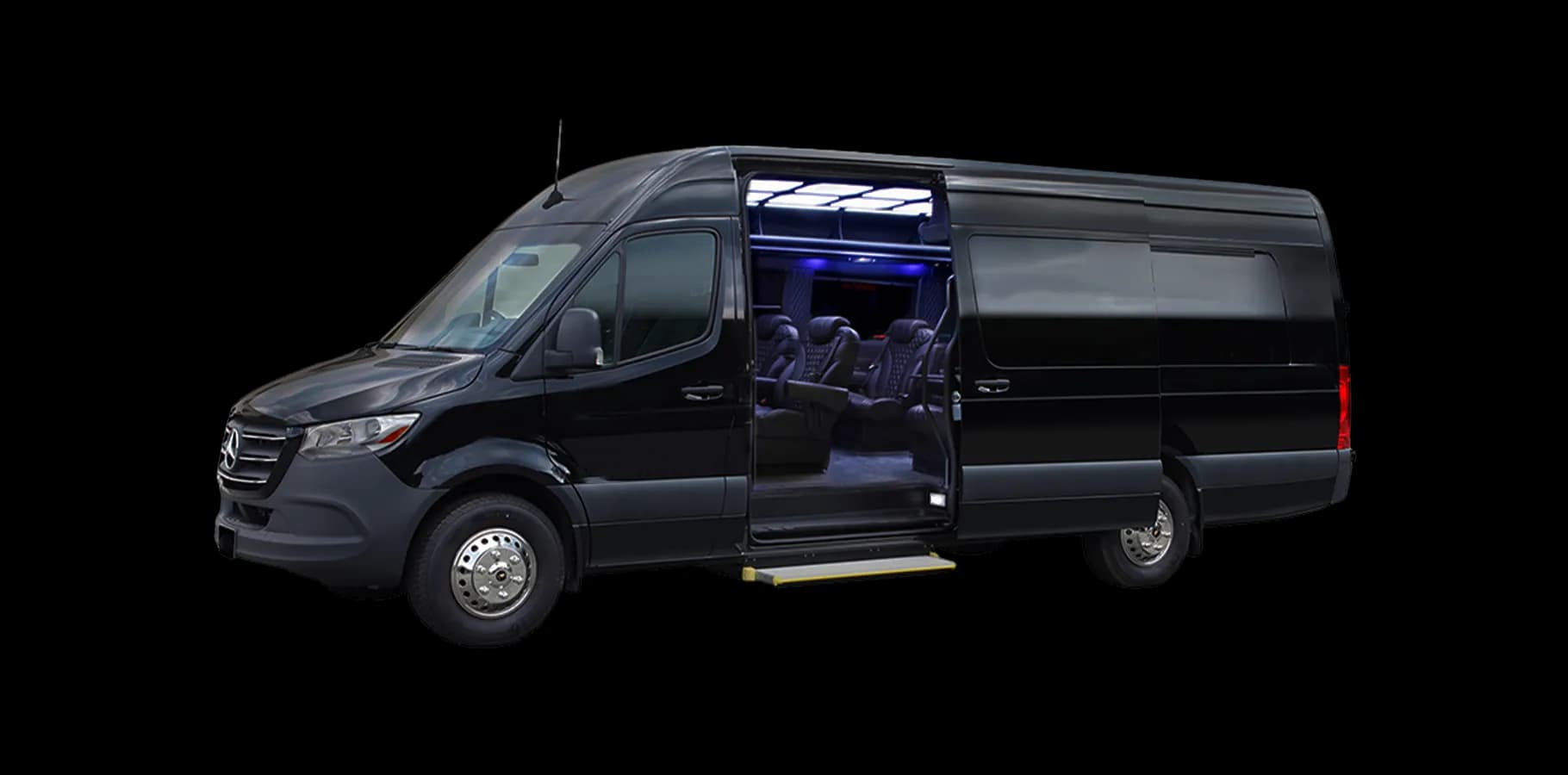
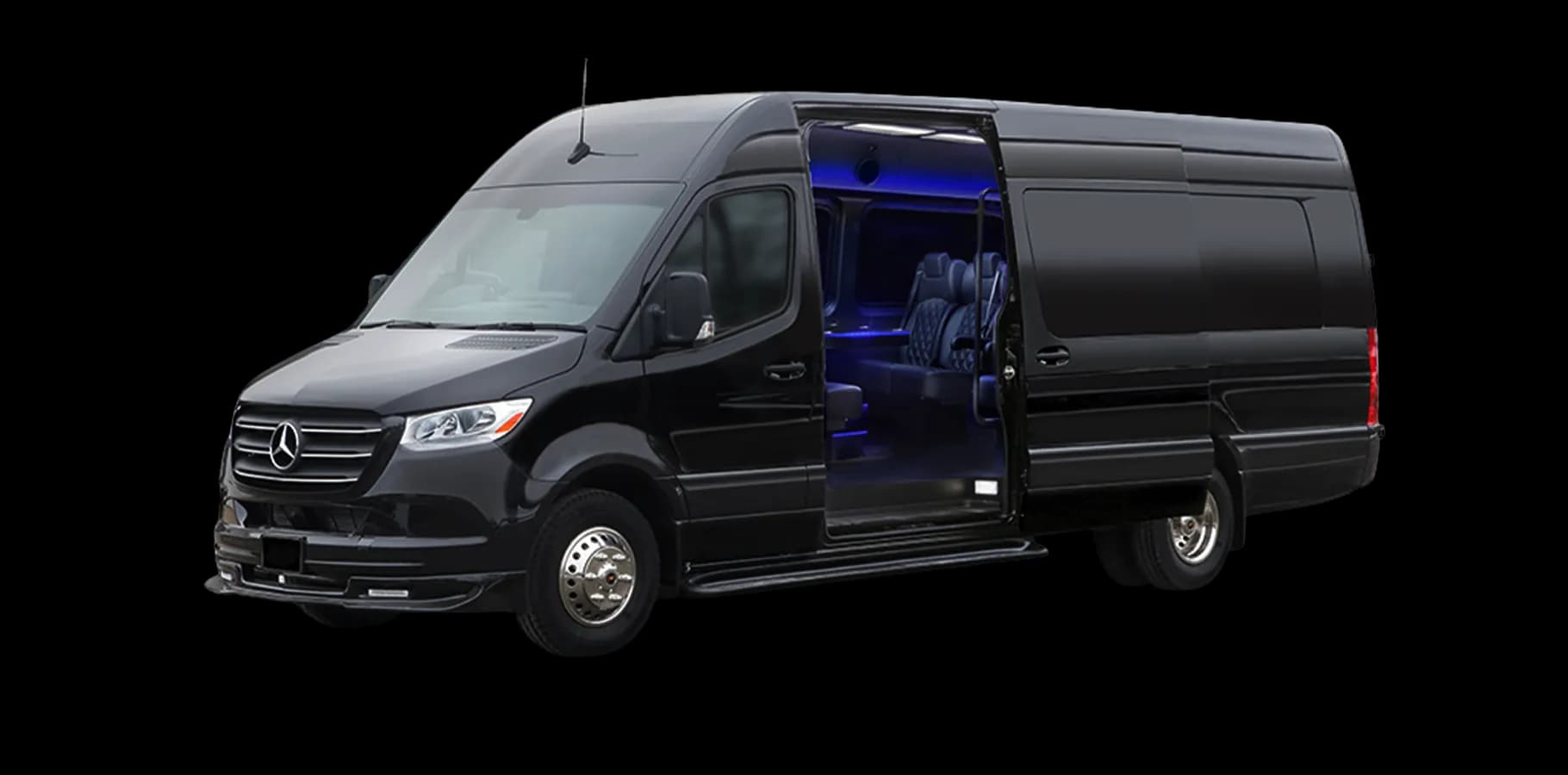
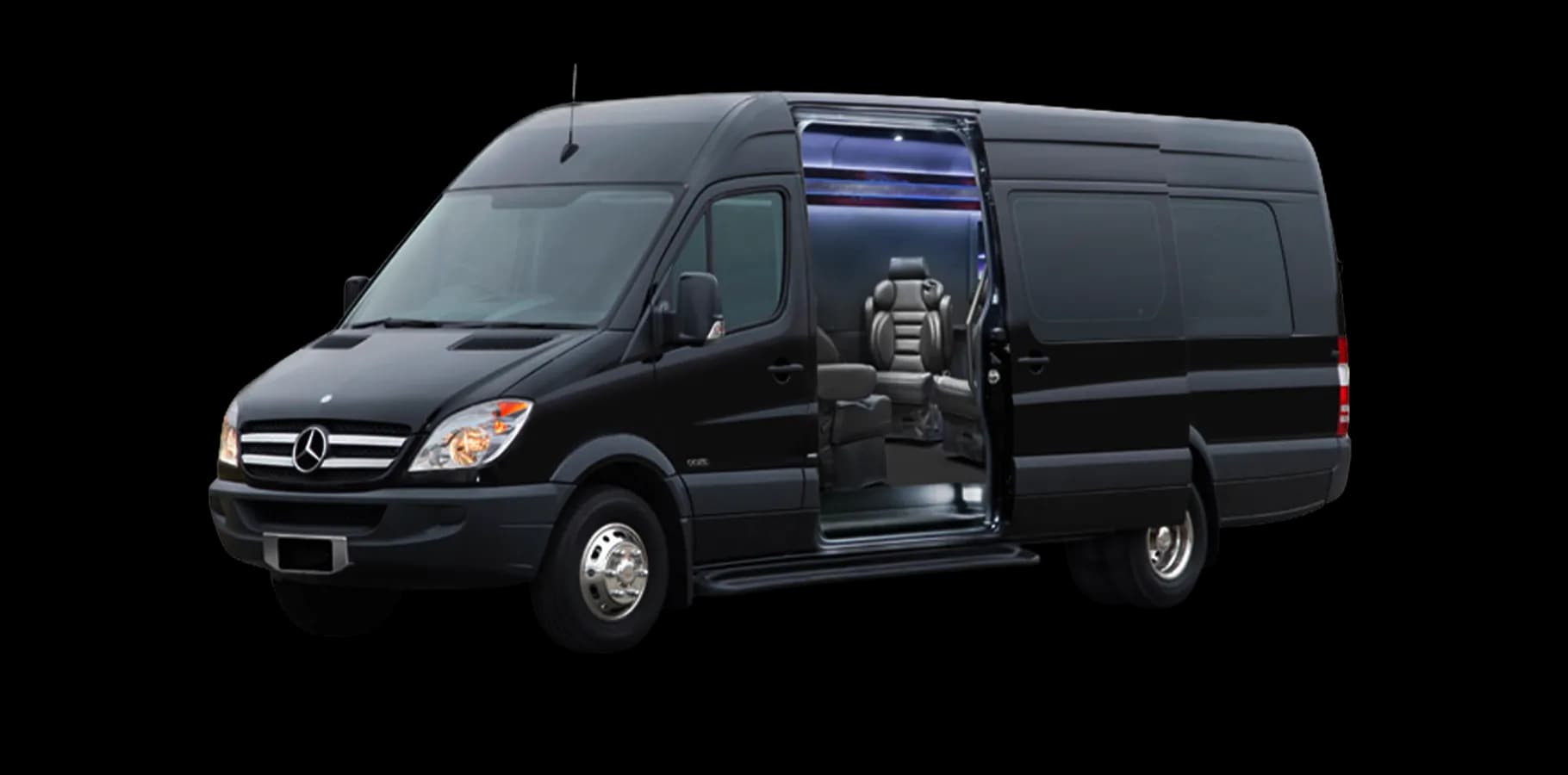
Mercedes-Benz Sprinter vans configured for executive transport seat 10–14 passengers in business-class comfort with individual armrests, fold-out tables, rear AV systems, and overhead storage. For corporate groups traveling between Manhattan offices, JFK Airport, and regional meeting venues across New Jersey and Connecticut, the Sprinter eliminates the coordination complexity of multiple sedans while keeping the team together. Event planners in Nassau and Suffolk counties favor Sprinters for wine country tours, where the combination of comfort and cargo flexibility creates the ideal daytrip vehicle.
Party Buses
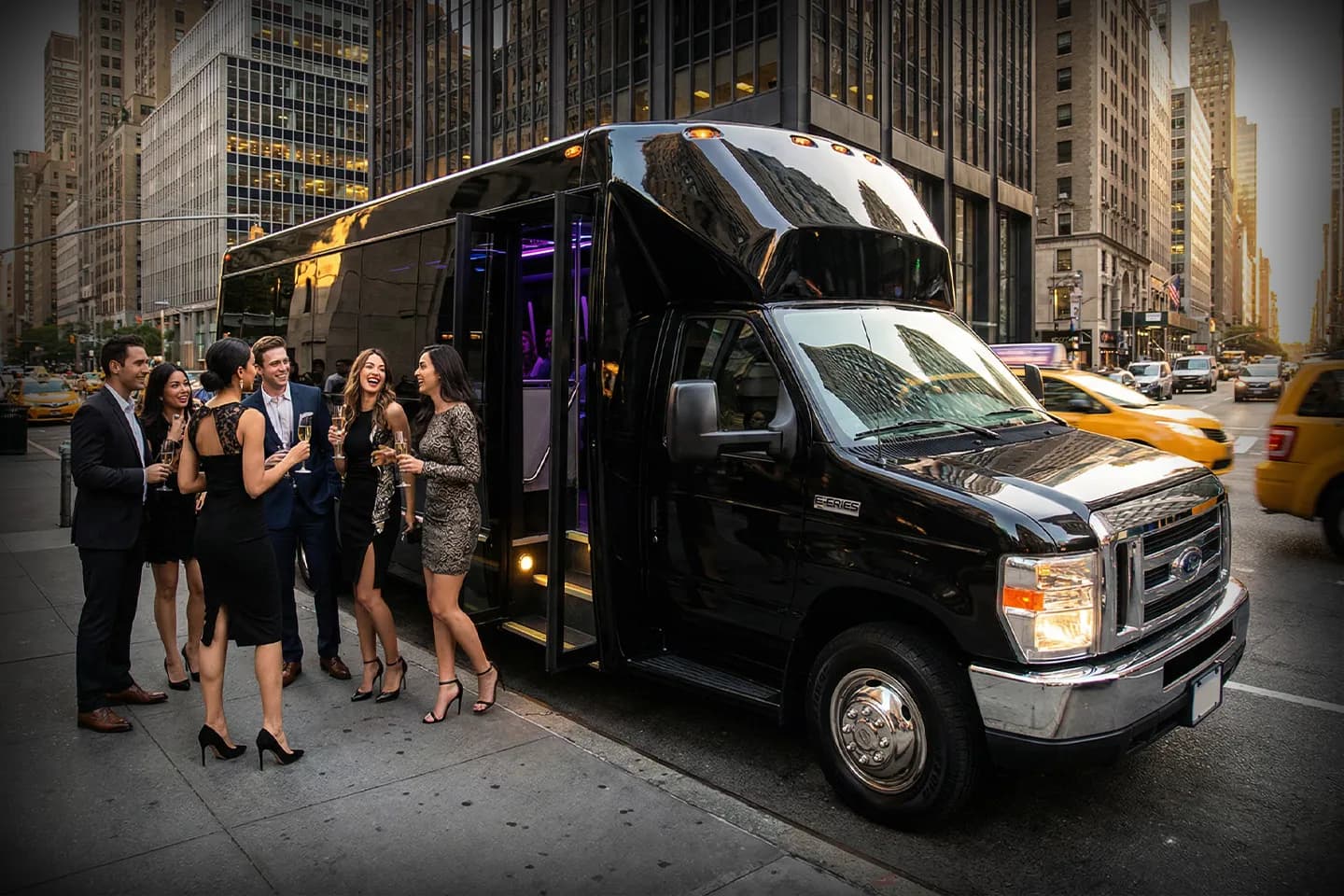
Custom-built party buses occupy a category far removed from standard transportation. These vehicles are essentially mobile nightclubs, featuring professional-grade sound systems capable of 3,000+ watts, synchronized LED lighting rigs, mirrored ceilings, hardwood dance floors, built-in cooler bars, and flat-screen entertainment. Annual maintenance on a party bus exceeds $15,000–$25,000 due to the complexity of entertainment systems, specialty lighting, and the intensive cleaning required after every event. The rates charged reflect this investment.
Mini and Full-Size Charter Buses
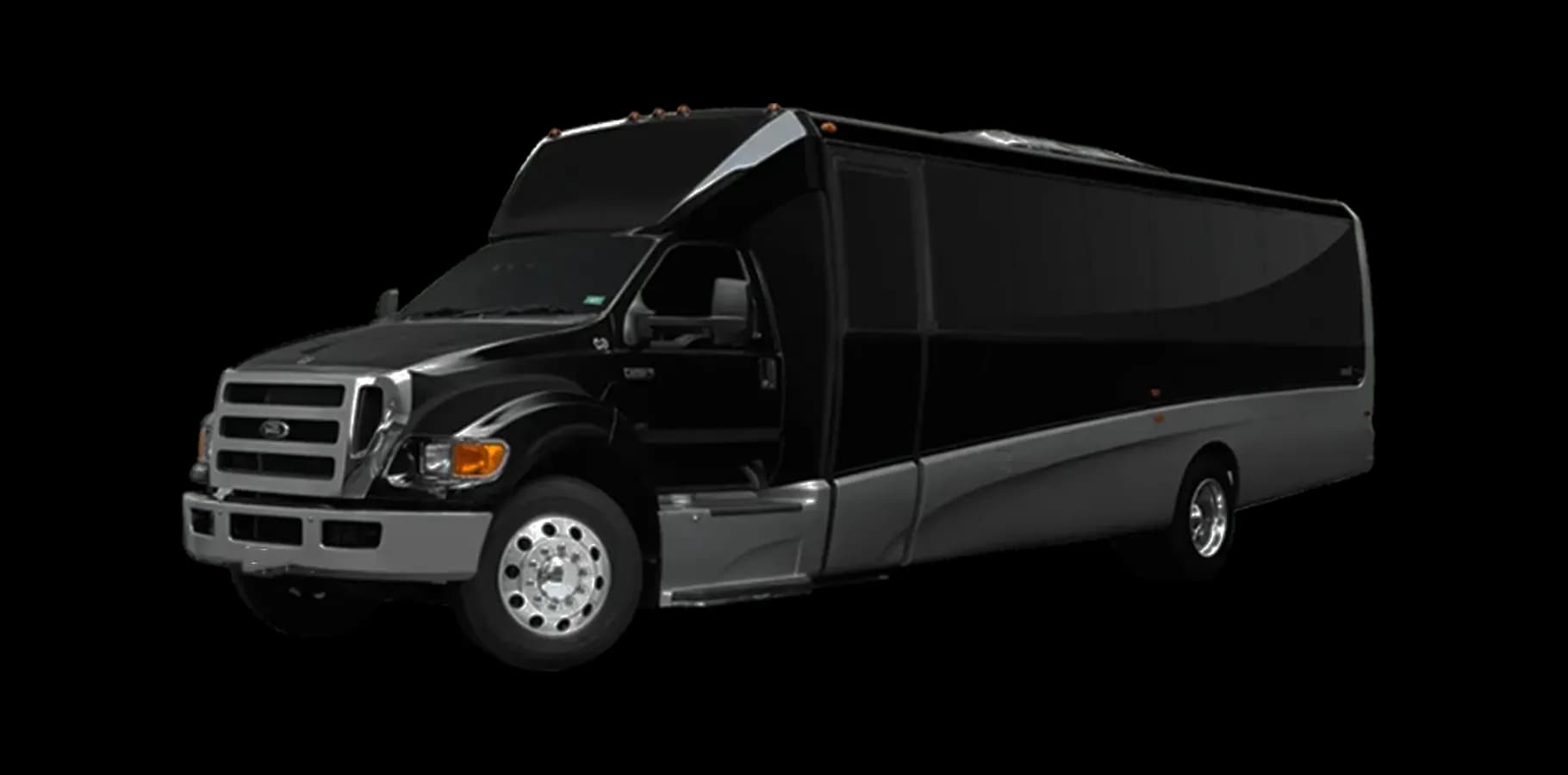
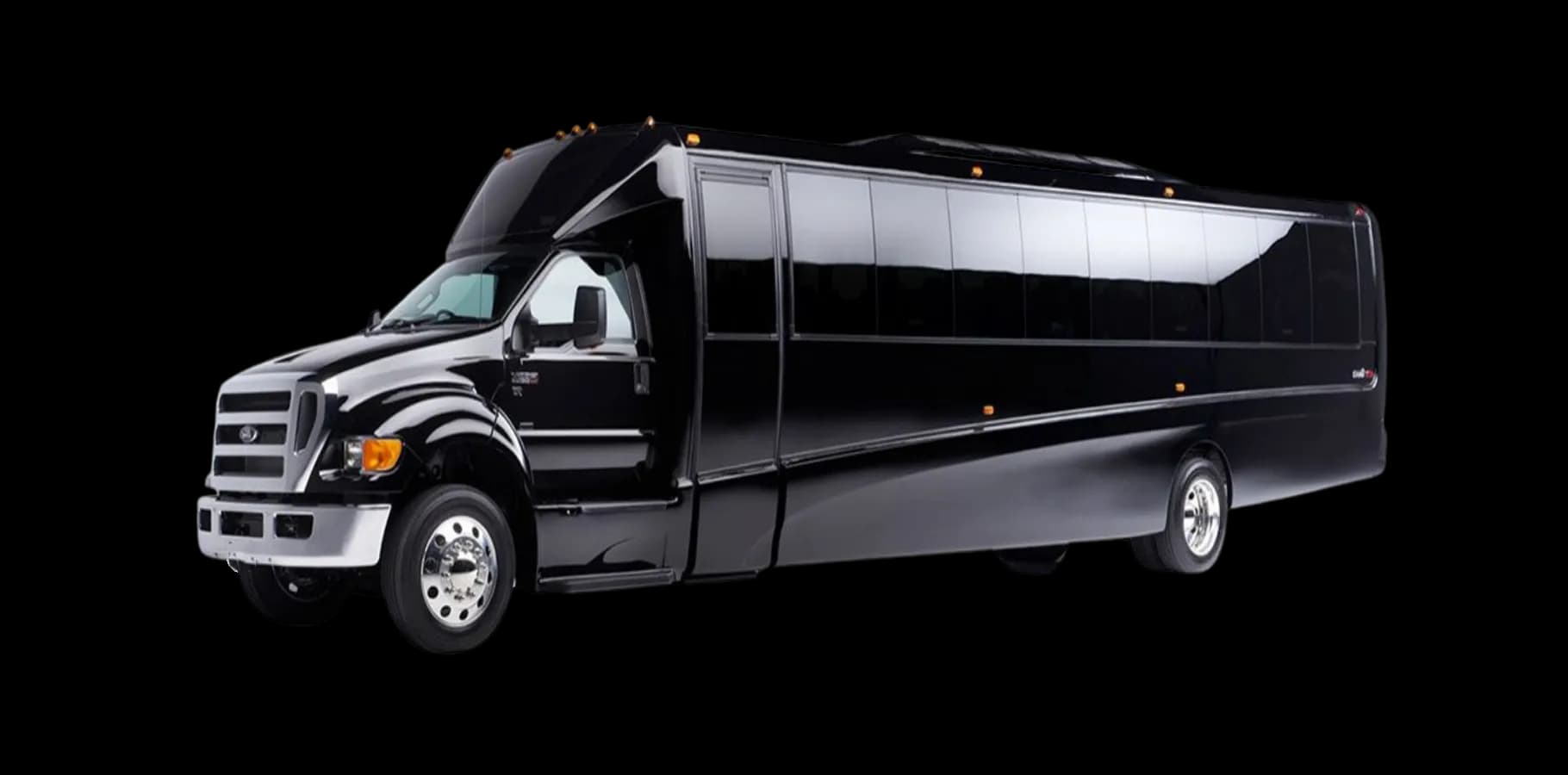
Charter buses bring economies of scale that no other vehicle type can match for large groups. A full-size 56-passenger coach moving a convention group from Manhattan hotels to a Staten Island venue replaces 10–12 individual sedan bookings, saving the client money per person while dramatically simplifying logistics. These vehicles require Commercial Driver's License (CDL) operators, adding another tier of driver qualification costs. Full-size coaches from reputable manufacturers carry onboard restrooms, overhead storage, individual reading lights, reclining seats, and Wi-Fi — making them appropriate for multi-hour interstate routes across the tri-state area and beyond.
Airport Transfer Pricing Across NYC Routes
Airport transportation represents the most common category of professional chauffeur service in New York City. The metro area serves three major commercial airports — John F. Kennedy International (JFK), LaGuardia (LGA), and Newark Liberty International (EWR) — each with unique routing characteristics, tolls, and congestion profiles. Below is a detailed pricing reference table for airport transfers across major NYC routes.
|
Route |
Vehicle Type |
Estimated Fare |
Includes |
|
LaGuardia (LGA) → Midtown Manhattan |
Sedan |
$110 – $150 |
Meet & greet, 60-min wait, 1 bag |
|
JFK Airport → Manhattan (any borough) |
Sedan |
$150 – $200 |
Flight tracking, 60-min wait, 2 bags |
|
Newark (EWR) → Manhattan |
Sedan |
$175 – $230 |
NJ tolls, meet & greet, 60-min wait |
|
JFK → Brooklyn / Queens |
Sedan |
$120 – $165 |
Flight tracking, 45-min wait |
|
LGA → Nassau County (Long Island) |
SUV |
$160 – $220 |
Meet & greet, 60-min wait |
|
JFK → Staten Island |
Sedan |
$140 – $185 |
Bridge tolls, flight tracking |
|
EWR → Bronx / Upper Manhattan |
SUV |
$200 – $270 |
Tolls, meet & greet, luggage assist |
|
JFK → Suffolk County (Long Island) |
SUV |
$220 – $310 |
Flight tracking, meet & greet, 2+ bags |
|
Any NYC Airport → Connecticut |
SUV / Sprinter Van |
$300 – $500+ |
Tolls, group seating, luggage assist |
|
Any NYC Airport → Philadelphia, PA |
Sprinter / Charter |
$450 – $700+ |
Full group, tolls, long-distance fee |
Booking Tip: Always book airport pickups using actual flight numbers, not scheduled arrival times. Professional services like Union Limousine track live FAA arrival data, meaning your driver adjusts automatically for delays, early arrivals, and gate changes — a capability that raw rideshare apps cannot replicate.
Geographic Coverage and Dead-Head Mileage Costs
One of the less visible contributors to chauffeur pricing in New York City is the concept of dead-head miles — the distance a vehicle travels empty while repositioning for the next assignment. Unlike rideshare apps that match drivers to nearby passengers continuously, professional chauffeur services must guarantee vehicle availability at specific locations and times, which requires positioning runs that generate no revenue.
When a Union Limousine sedan drops a client at JFK Airport from Manhattan, the driver may spend 30–60 minutes returning to the city in traffic before the next assignment. That return trip consumes fuel, driver time, and vehicle wear with zero income attached. Multiplied across dozens of daily trips and a fleet operating across all five boroughs, Nassau County, Suffolk County, and regular routes to New Jersey and Connecticut, dead-head mileage represents a meaningful cost absorbed into every published rate.
Service Area Cost Considerations by Zone
- Manhattan (Primary Zone): Highest density, most frequent service. Congestion pricing surcharges, premium parking fees, and building access delays add $15–$40 to operational cost per assignment.
- Brooklyn & Queens: Strong residential demand for JFK and LGA transfers. Bridge tolls and variable traffic contribute $10–$25 in additional per-trip costs beyond the Manhattan baseline.
- The Bronx & Staten Island: Less dense demand reduces deadhead efficiency. Staten Island service includes Goethals or Verrazano Bridge tolls. Express service commands premium rates.
- Nassau & Suffolk Counties (Long Island): Extended transfer distances from NYC airports. Rates reflect additional driver hours, fuel, and return-trip deadhead on routes averaging 45–90 minutes each way.
- New Jersey (Tri-State): Lincoln Tunnel, Holland Tunnel, and George Washington Bridge tolls add $15–$20 per crossing. Newark Airport routes have unique terminal access fees.
- Connecticut & Pennsylvania: Long-distance route surcharges apply. Minimum 3–4 hour bookings typically required. Overnight driver accommodations may apply for same-day return requirements.
Technology Infrastructure Investment
Modern professional chauffeur services operate on a foundation of sophisticated technology that clients rarely see but constantly benefit from. We maintain enterprise-grade dispatch and fleet management systems that track every vehicle in real time, optimize routing based on live traffic data, and enable seamless communication between dispatchers, drivers, and clients simultaneously.
Technology Systems in a Professional Chauffeur Operation
- Dispatch Management Software: Real-time vehicle tracking, automated driver assignment, live traffic overlays, and client notification systems. Enterprise licensing runs $3,000–$8,000 per month for a mid-size fleet.
- Flight Tracking Integration: Direct API connections to FAA and airline arrival data streams. Automatically adjusts driver departure times based on actual gate arrival information.
- Mobile Client App and Online Booking Portal: Secure reservation system with real-time availability, instant confirmation, pricing transparency, and post-trip receipts. Development and maintenance: $25,000–$75,000 annually.
- Driver Mobile App with Navigation: Turn-by-turn routing with real-time traffic, client location sharing, digital trip sheets, and in-app communication. Reduces dispatch calls and improves punctuality.
- Payment Processing (PCI Compliant): Secure credit card processing, corporate account billing, ACH transfers, and digital receipt management. PCI compliance audits cost $5,000–$15,000 annually.
- CRM System for Client Profiles: Stores repeat client preferences including vehicle preferences, preferred temperature settings, music choices, and frequent destination history. Enables personalized service delivery at scale.
- Vehicle GPS and Telematics: Monitors speed, hard braking, route deviation, idling time, and driver behavior in real time. Data used for coaching, insurance discounts, and safety accountability.
Seasonal Demand Patterns vs. Pricing Cycles
Understanding when and why demand peaks and valleys occur in the NYC chauffeur market helps clients book smarter and explains why rates fluctuate across the calendar year. The table below maps the annual demand cycle with practical notes for each period.
|
Period |
Demand Level |
Peak Vehicles / Notes |
|
January – February |
Low |
Sedans & SUVs for corporate travel; availability high, possible discounts on longer bookings |
|
March – April |
Moderate |
Spring corporate events pick up; prom season begins (stretch limos / party buses book fast) |
|
May – June |
Very High |
Peak prom season, early weddings, graduations; limousines and party buses may sell out weeks ahead |
|
July – August |
High |
Summer weddings, corporate tours, NYC visitors; Hamptons routes in high demand (Suffolk County) |
|
September – October |
Very High |
Fall wedding peak; UN General Assembly (corporate sedan demand surges in Midtown) |
|
November |
Moderate |
Corporate year-end events begin; advance booking for December strongly recommended |
|
December |
Extreme |
Holiday parties, New Year's Eve; surge pricing applies; party buses and limos book 4–8 weeks ahead |
|
New Year's Eve (Dec 31) |
Maximum |
2–3× standard rates; all vehicle classes; book 60–90 days in advance or risk unavailability |
Important: New Year's Eve is statistically the highest-demand single night in the NYC chauffeur calendar. Party buses and stretch limousines can command 200–300% of standard hourly rates. If NYE transportation is important to you, place your booking no later than October 1st.
How to Choose the Right Vehicle for Your Needs?
One of the most common booking mistakes clients make is choosing a vehicle based on price alone rather than suitability. Selecting too small a vehicle creates discomfort; selecting unnecessarily large vehicles wastes budget. The guide below matches common scenarios to the ideal vehicle choice with clear reasoning.
|
Your Situation |
Recommended Vehicle |
Why It Works |
|
Solo executive, airport transfer |
Luxury Sedan |
Private, quiet, punctual; perfect for calls and laptop work en route |
|
Family of 5 with luggage |
Premium SUV |
Ample passenger space and cargo room without sacrificing comfort |
|
Wedding couple + bridal party (8–10) |
Stretch Limousine |
Iconic, celebratory, and spacious; creates lasting photo memories |
|
Corporate team of 10–12 |
Sprinter Van |
Keeps the whole team together; ideal for off-site meetings and airport runs |
|
Bachelor/bachelorette party (20–25) |
Party Bus |
Entertainment-ready with sound, lighting, and bar; keeps the party rolling |
|
Wedding guest group (30–35) |
Mini Charter Bus |
Cost-effective per seat; handles venue-to-venue logistics seamlessly |
|
Conference/convention (40–50+) |
Full-Size Charter Bus |
Maximum capacity with luggage storage; professional and efficient |
|
Wine tour / day trip from NYC |
Sprinter Van |
Intimate, flexible, and equipped for group day trips across NJ or NY |
|
Prom night group (15–20 teens) |
Party Bus / Stretch Limo |
Safe, supervised transport with professional driver; parents approved |
Expert Tips & Tricks - Get the Most From Your Chauffeur Service?
Whether you are a first-time client or a seasoned frequent flyer, these expert tips will help you secure the best service, avoid common pitfalls, and stretch your transportation budget further without sacrificing quality.
Tips for Booking and Saving
- Book at Least 48–72 Hours in Advance for Sedans and SUVs: Last-minute airport bookings during Monday and Friday morning rush hours are the hardest to guarantee. Advance reservations lock in confirmed availability and frequently qualify for pre-paid rate discounts of 5–10%.
- Leverage Corporate Account Programs: If your company uses chauffeur services 8 or more times per month, a corporate account typically delivers 12–20% off standard rates, priority vehicle assignment, consolidated monthly invoicing, and a dedicated account manager.
- Be Precise About Group Size: Booking a sedan for 4 people with significant luggage creates problems at the curb. Always tell your reservation specialist exactly how many passengers and how many pieces of luggage you have. Upgrading to the right vehicle before arrival is far smoother than scrambling at the pickup point.
- Ask About Package Deals for Multi-Stop Events: Wedding transportation packages that combine hotel-to-venue, venue-to-reception, and reception-to-hotel legs are priced more favorably than three separate bookings. Union Limousine offers customized wedding day packages designed for seamless multi-stop coordination.
- Book Charter Buses During Off-Peak Months: January, February, and early March offer the most vehicle availability and negotiating room for corporate and school group charter bookings. Operators are eager to fill otherwise quiet calendars.
- Understand Tolls and Surcharges Before You Book: Ask specifically which tolls, airport fees, and surcharges are included versus billed separately. Reputable companies disclose all fees upfront. Hidden charges discovered on the invoice erode trust and budgets.
- Verify TLC Licensing Before Any Booking: Never hire an unlicensed operator regardless of price. Unlicensed vehicles lack required insurance, meaning passengers have no legal protection in the event of an accident. Confirm licensing at the TLC website.
- Request the Same Driver for Recurring Trips: Corporate clients who use the same driver repeatedly benefit from a driver who knows their preferences, habitual routes, and scheduling quirks. Most professional services accommodate repeat-driver requests at no extra charge.
Tips for Airport Transfers Specifically
- Provide Your Cell Number and Flight Number: Enables your driver to contact you immediately upon landing and adjust arrival time if your flight diverts or you're delayed at customs.
- Use the Meet-and-Greet Option: For first-time visitors to NYC or clients traveling with heavy luggage, a name-board greeting inside the terminal is worth the nominal add-on fee. It eliminates the confusion of curbside identification in a crowded arrivals hall.
- Factor in Customs for International Arrivals: International arrivals at JFK can spend 45–90 minutes in customs. Most professional services include this in their complimentary wait time for international flights — but confirm this when booking.
- Understand the Difference Between EWR, JFK, and LGA: Newark Liberty (EWR) is often faster for Midtown Manhattan destinations due to less tunnel and bridge congestion during off-peak hours. LGA serves upper Manhattan and the Bronx fastest. JFK is the primary hub for international arrivals and connections to Long Island.
- Pre-Set Your Drop-Off Location Precisely: In Manhattan, the difference between a drop on 6th Avenue versus 8th Avenue can mean a 10-minute walk. Provide the exact address, building entrance side, and any specific drop-off instructions when reserving.
Tips for Wedding and Event Transportation
- Start with a Transportation Timeline: Map out every movement — getting ready location to ceremony, ceremony to portraits, portraits to reception, reception to hotel — before calling a vendor. A clear timeline lets the company quote accurately and prevents scope creep.
- Confirm Backup Vehicle Plans: Ask specifically what happens if the primary vehicle experiences a mechanical issue on your wedding day. Reputable companies maintain reserve vehicles and can reroute another driver within minutes. Insist on a written answer.
- Discuss Decorations in Advance: Many couples want to decorate limousines or party buses. Companies have specific policies on what is permissible to protect vehicle interiors. Confirm in advance — not the morning of the event.
- Book for Longer Than You Think You Need: Events consistently run late. Booking an extra 30–60 minutes of coverage at the reservation stage is far less expensive than requesting an unplanned hour extension on the day.
- Coordinate Guest List Pickup Points: For wedding guest buses, consolidating pickup locations to 2–3 stops rather than 6–8 individual addresses dramatically improves on-time performance and reduces vehicle cost.
Tips for Corporate Travel Managers
- Establish a Preferred Vendor Agreement: A formal preferred vendor arrangement with a company like Union Limousine delivers negotiated rate caps, priority availability during major events and conferences, and simplified invoice reconciliation.
- Implement a Ground Transportation Policy: Define when chauffeur service is appropriate (executives, client entertainment, late-night travel), and which vehicle classes are authorized. Clear policies prevent unauthorized upgrades and control costs.
- Use Data to Optimize Spend: Professional services provide detailed trip reports. Monthly data review identifies booking patterns, high-cost routes, and opportunities to consolidate trips into Sprinter vans rather than multiple sedans.
- Plan Around NYC Events Calendar: The UN General Assembly in September, New York Fashion Week in February and September, and major conventions at the Javits Center create predictable demand spikes. Book all travel 30 days ahead during these windows.
Evaluating Chauffeur Companies Through Industry Standards and Compliance
Understanding which standards define legitimate, trustworthy chauffeur service providers in New York City helps clients evaluate vendors objectively. The following benchmarks are drawn from industry associations, regulatory bodies, and established professional standards:
- National Limousine Association (NLA): Membership in the NLA indicates a commitment to industry best practices, ethics, and peer accountability. NLA members participate in safety education programs and professional development specific to the chauffeured ground transportation industry.
- TLC Good Standing Certification: Active TLC licenses in good standing — no suspended vehicles, no outstanding violations — are the minimum threshold for professional credibility in the New York market.
- FMCSA Compliance for Interstate Charter: Companies operating charter buses across state lines (NY to NJ, CT, or PA) must hold active USDOT numbers and comply with Federal Motor Carrier Safety Administration regulations including hours-of-service rules for CDL drivers.
- ISO-Certified Fleet Management: Leading operators track vehicle maintenance according to manufacturer-specified intervals using documented maintenance management systems, reducing breakdown risk and extending vehicle lifespan.
- ADA Accessibility Standards: TLC rules require operators above certain fleet sizes to maintain accessible vehicles meeting Americans with Disabilities Act standards. This commitment to accessibility reflects genuine service breadth.
Ready to Book? Contact Union Limousine Today
Choosing the right chauffeur service is a decision that directly affects your punctuality, your comfort, and your peace of mind. Union Limousine serves clients throughout New York City, Long Island, New Jersey, Connecticut, and Pennsylvania with a full fleet of professionally maintained vehicles and TLC-licensed, trained chauffeurs available 24 hours a day, 7 days a week, 365 days a year. We handle everything from solo executive airport transfers to full-fleet wedding coordination, corporate group charters, and large-scale event transportation.
Our reservation specialists are available around the clock to discuss your needs, confirm vehicle availability, explain pricing in detail, and build a transportation plan that works for your schedule and budget. There are no hidden fees, no surprise surcharges, and no compromises on service quality.
Three Easy Ways to Reach Us:
|
Email Us |
Call Us |
Book Online |
|
info@unionlimousine.com |
+1 (718) 514-9881 |
Reserve Now at unionlimousine.com |
|
24/7 response for reservations, quotes, and inquiries |
Speak directly with a live reservation specialist anytime |
Instant confirmation, real-time availability, secure checkout |
We serve Manhattan, Brooklyn, Queens, the Bronx, Staten Island, Nassau County, Suffolk County, and tri-state destinations across New York, New Jersey, Connecticut, and Pennsylvania. Request your quote today and experience the difference that professional chauffeur service makes.
Conclusion
Chauffeur service pricing in New York is not arbitrary. Every dollar in the rate structure corresponds to a tangible operational cost, regulatory requirement, or quality investment that directly benefits the client. The cost of insurance that protects you in an accident, the salary of a TLC-licensed professional who trained for months before driving a single client, the technology that ensures your driver knows your flight arrived early - these are not overhead curiosities. They are the foundation of a service category that delivers what it promises.
Clients who choose professional chauffeur services over cheaper alternatives are making a calculated decision that reliability, comfort, safety, and professionalism are worth the premium. For executives whose time is measured in hourly rates far exceeding the cost of a sedan booking, for couples whose wedding day photos will exist forever, for corporate travel managers whose CEO clients form impressions of their company in the back seat — the calculation is straightforward.
Union Limousine has built its reputation throughout Manhattan, Brooklyn, Queens, the Bronx, Staten Island, Long Island, and the broader tri-state area by delivering exactly what clients expect: a professional, punctual, impeccably maintained vehicle with a trained chauffeur who treats every trip as a priority. That commitment requires investment. And that investment is precisely what makes the service worth booking
Frequently Asked Questions
Admin User
Related Blogs






























Related Fleets